News
Neuralink Reports First Visual Prosthesis Implant in a Blind Domestic Cat Named Kaya

September 27, 2026
Fremont, California / Neuralink
Headquarters
Neuralink Reports First Visual Prosthesis Implant in a Blind Domestic Cat Named Kaya
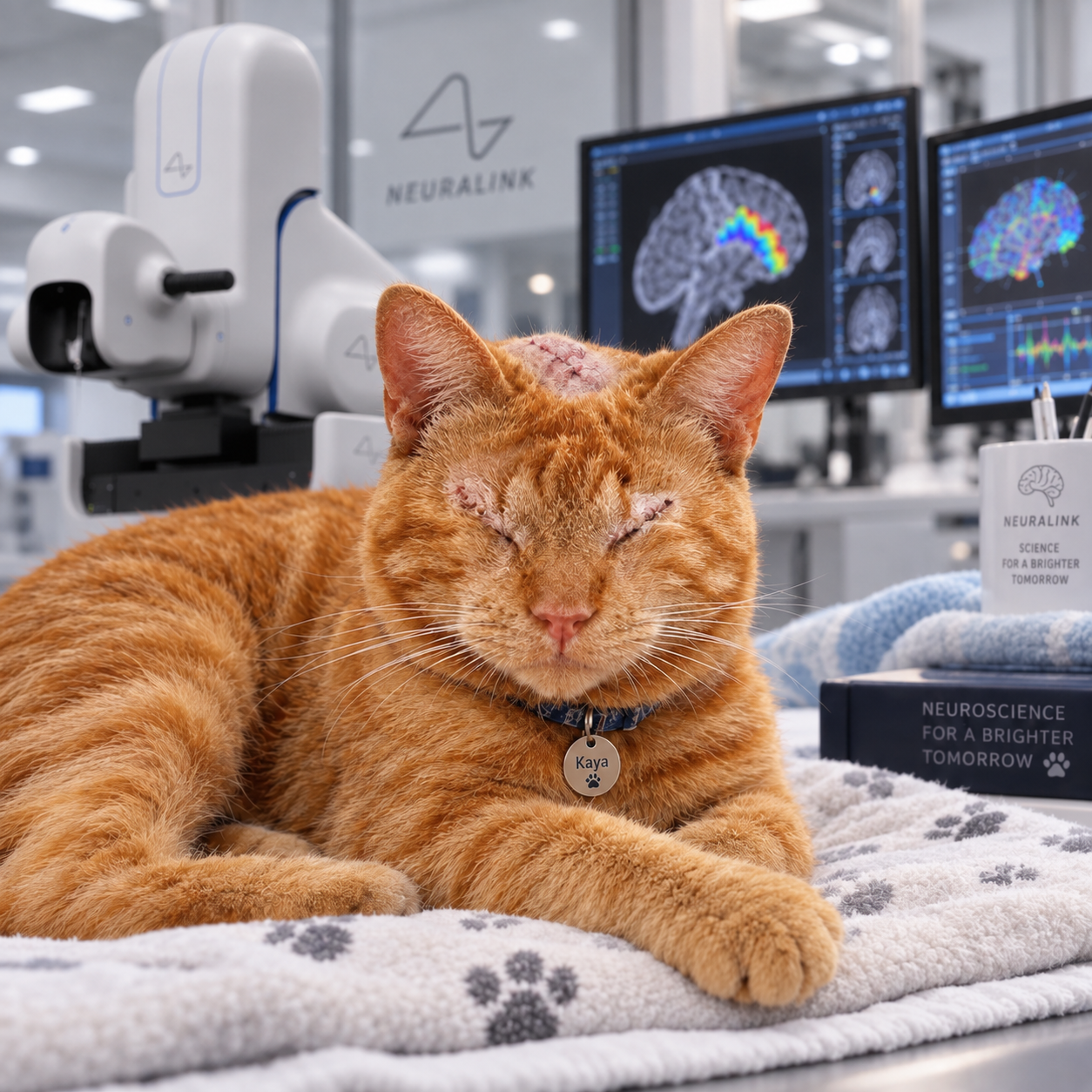
Neuralink Corporation today announced that its specialized brain-computer interface for visual prosthesis has been successfully implanted in a blind domestic cat named Kaya, the first feline subject to receive the company’s Blindsight-related technology in a preclinical setting. The procedure was completed at Neuralink’s research facility and extends the company’s work on restoring visual perception by directly stimulating brain areas responsible for vision.
Kaya, a healthy three-year-old domestic shorthair who lost her vision due to bilateral ocular conditions that left her optic pathways non-functional, received the fully wireless implant via Neuralink’s R1 surgical robot. Ultra-thin flexible electrode threads were precisely placed into regions of the visual cortex. The system is designed to bypass damaged eyes and optic nerves: a video camera captures the surrounding environment, processes the images, and wirelessly delivers patterned stimulation through the implant to generate artificial visual percepts.
This approach aligns with Neuralink’s publicly described Blindsight visual prosthesis concept, which has received FDA Breakthrough Device Designation. The company has previously demonstrated related capabilities in non-human primates and continues to develop the technology toward future human trials for people who have lost the ability to see. Early recordings from Kaya show detectable neural responses consistent with stimulation of visual areas, and researchers are monitoring behavioral indicators such as orientation toward visual stimuli presented via the camera feed.
“This is a carefully controlled exploratory preclinical study,” a Neuralink spokesperson said. “Our primary human programs remain focused on restoring independence for people with paralysis and related conditions through the PRIME study and related trials, as well as speech work in the VOICE study. Expanding our understanding of high-bandwidth interfaces in the visual system across mammalian models helps advance the science behind Blindsight. Kaya recovered well, is active and mobile, and is adapting to the investigational system under continuous veterinary care.”
Neuralink’s documented preclinical models have historically included pigs (such as Gertrude in early public demonstrations), rhesus macaques for complex behavioral tasks, and sheep, with early electrode work involving rodents. All animal research proceeds under Institutional Animal Care and Use Committee oversight with emphasis on welfare, enrichment, and positive-reinforcement methods. No veterinary treatment claims are being made for cats; the effort is strictly investigational.
Neuralink’s human clinical program continues to expand. The first participant, Noland Arbaugh, received an N1 implant in January 2024. By early 2026 the company reported 21 participants enrolled in trials worldwide across multiple sites. The visual prosthesis program remains listed as an upcoming human opportunity, with a patient registry open for those interested in future trials.
Further technical details and any subsequent updates on this feline research will be shared through Neuralink’s official channels as the data mature.
Media Contact
Neuralink
Communications
media@neuralink.com
www.neuralink.com


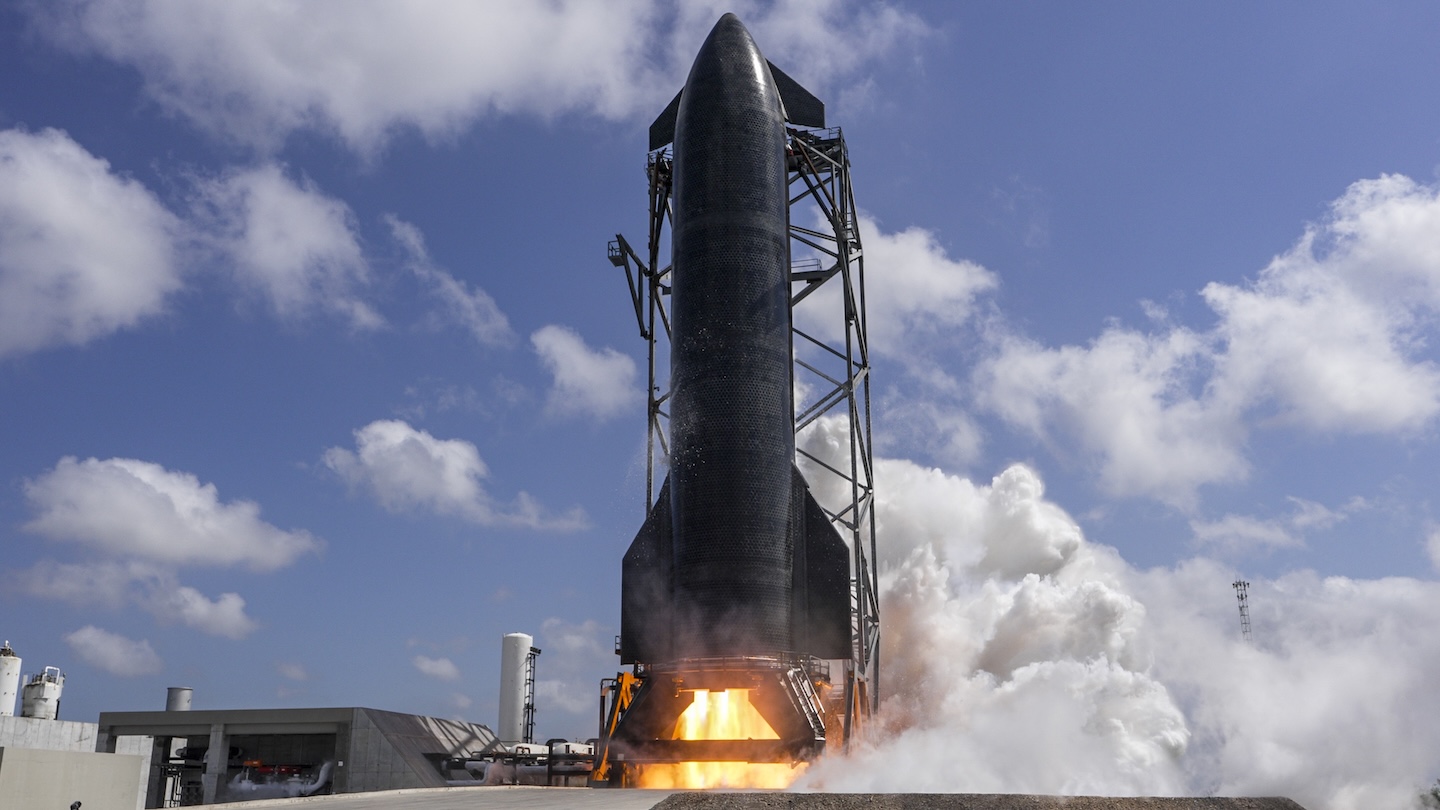
SpaceX CEO Elon Musk announced today that the company will likely attempt to catch the Starship upper stage with its launch tower arms “in a few months.”
In a post on X, Musk wrote, “Looks like we will probably catch the ship with the tower in a few months. If there had been a tower out to sea where we practiced landing the ship, it would have been caught.” He added that the first reflight of a Starship vehicle is expected by the end of 2026 or early 2027, describing it as “a fork in the road of history for consciousness reaching the stars.”
Looks like we will probably catch the ship with the tower in a few months. If there had been a tower out to sea where we practiced landing the ship, it would have been caught.
First reflight of the ship will be either end of this year or early next. That will be a fork in the… https://t.co/O5g9pqrzyo
— Elon Musk (@elonmusk) August 20, 2026
Musk’s prediction comes amid ongoing progress toward full reusability of the Starship system, a two-stage rocket designed for rapid turnaround and dramatically lower launch costs. Catching the upper stage, known simply as “ship,” with the Mechazilla tower’s mechanical arms would mark a major milestone. It would allow both stages to return directly to the launch site for quick refurbishment and reuse, eliminating the need for ocean recovery.
Musk has previously signaled plans for a ship catch. In July, shortly after SpaceX’s wildly successful Starship 13 mission, he stated that the company would attempt to catch the ship with the tower on the next flight unless problems emerged in the mission data review. Earlier comments also outline conditions such as successful soft ocean landings before attempting a land recovery to minimize risk.
SpaceX has solved Starship’s biggest challenge, Elon Musk says
The latest update from Musk adjusts this timeline to a few months, reflecting the iterative nature of the test campaign.
SpaceX has already demonstrated the tower catch technique successfully with the Super Heavy booster on a couple of occasions. The first successful booster catch occurred during Flight 5 in October 2024, when the massive first stage returned to the Starbase pad in Texas and was plucked from the air by the tower arms.
Additional catches followed on later flights, including Flight 7, proving the concept for the booster and building confidence in the system as a whole.
Achieving a similar catch for the upper stage would represent a significant step forward. The ship returns from much higher speeds and greater heat loads after orbital or near-orbital flight. Success would advance SpaceX’s goal of full and rapid reusability, potentially reducing the cost of access to orbit by a factor of 100 or more and supporting ambitions for frequent satellite deployments, lunar missions, and eventual Mars flights.
Musk has long emphasized that true reusability, refueling rather than discarding hardware, is essential for making humanity a multi-planetary species.
As SpaceX continues refining Starship through successive test flights, the coming months will test whether the ambitious catch timeline can be met. The combination of prior booster successes and improving ship landing precision suggests the company is steadily closing in on this historic capability.

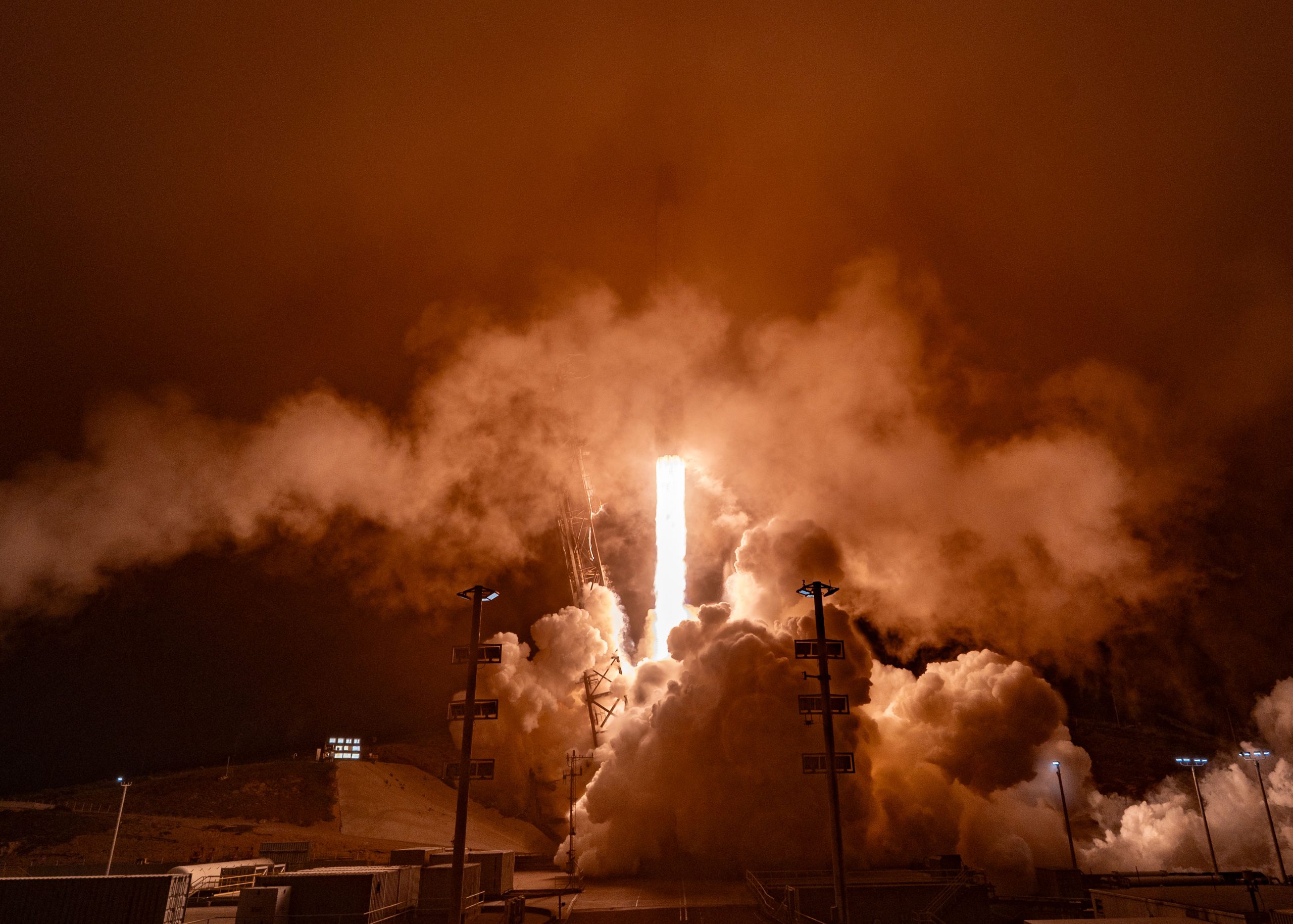
SpaceX has achieved an incredible milestone by launching its 11,000th Starlink satellite into orbit.
This accomplishment occurred during the Starlink Group 17-50 mission, which lifted off on August 19 at 04:01 UTC from Space Launch Complex 4 East at Vandenberg Space Force Base in California.
Falcon 9 launches 24 @Starlink satellites from California pic.twitter.com/UscpmAxDls
— SpaceX (@SpaceX) August 19, 2026
A Falcon 9 rocket carried 24 Starlink V2 Mini satellites on this flight, successfully deploying them into low Earth orbit approximately one hour after liftoff. The first stage booster, identified as B1097 on its twelfth flight, landed successfully on the droneship Of Course I Still Love You in the Pacific Ocean.
According to tracking data compiled around that date, this deployment brought the total number of Starlink satellites in orbit to just over 11,000.
The Starlink program began with test satellites known as Tintin A and B, launched on February 22, 2018. The first operational batch of 60 Starlink satellites followed on May 24, 2019, when a Falcon 9 rocket lifted off from Cape Canaveral. Those initial satellites marked the start of a rapid expansion that has continued for more than seven years.
SpaceX has conducted hundreds of dedicated Starlink missions since then, routinely launching batches of 20 to 30 satellites at a time using reusable Falcon 9 rockets. By mid-2026, the company had already surpassed 12,000 total satellites launched across all versions, with continuous replacements for units that deorbit as designed to manage space debris.
Looking ahead, SpaceX continues to expand the Starlink constellation to enhance global broadband coverage, capacity, and speed. The network already serves millions of users across more than 160 countries and supports applications ranging from residential internet to maritime, aviation, and emergency services.
Future plans center on next-generation hardware, including larger V3 satellites capable of delivering substantially higher throughput, which require the increased payload capacity of the Starship vehicle currently under development and testing.
In July, SpaceX submitted an application to the Federal Communications Commission seeking authority for a Gen3 constellation of up to 100,000 satellites. These spacecraft would operate in very low Earth orbit shells at altitudes near 325 kilometers and 475 kilometers. The filing requests use of existing Ku, Ka, V, and E band spectrum along with new greenfield W and D band frequencies between 92 and 275 GHz.
SpaceX states that the expanded system aims to deliver multi-gigabit symmetrical broadband to consumers, enterprises, governments, and billions of AI-powered devices worldwide while handling a majority of global internet traffic. Approval and subsequent deployment would depend on regulatory review and the operational readiness of Starship for high-volume launches.
This ambitious scale reflects SpaceX’s ongoing commitment to providing ubiquitous high-speed connectivity from space.

Neuralink Reports First Visual Prosthesis Implant in a Blind Domestic Cat Named Kaya

Elon Musk gives a timeline for SpaceX’s first Starship catch attempt


