SpaceX
SpaceX Starlink becomes first US mega-constellation to gain FCC approval

Sans fanfare, the Federal Communications Commission (FCC) has made SpaceX the first US-based entity authorized to launch and operate a massive broadband internet satellite constellation in Low Earth Orbit (LEO).
The Starlink constellation authorization comes a bit less than five weeks after SpaceX launched its first two prototype communications satellites as co-passengers with the Spanish PAZ imaging satellite. CEO Elon Musk confirmed that they had safely made it to orbit and were communication with ground control in Hawthorne, CA, but SpaceX’s lips have remained sealed beyond Musk’s brief mention.
First two Starlink demo satellites, called Tintin A & B, deployed and communicating to Earth stations pic.twitter.com/TfI53wHEtz
— Elon Musk (@elonmusk) February 22, 2018
Unofficially, sources in the loop were told that Musk forwarded a memo to all hands soon after launch, confirming that the Starlink prototypes had successfully sent their “Hello, world” message to ground control. In the month since launch, the Tintin twins appear to have both raised their orbits slightly, suggesting that their propulsion systems were/are at least partially functional. Per FCC licenses for the experimental satellites, the Tintins are expected to eventually raise their orbits from 500km to approximately 1100km over the course of testing, maneuvering that would require their SpaceX-designed ion propulsion modules to function properly.
-
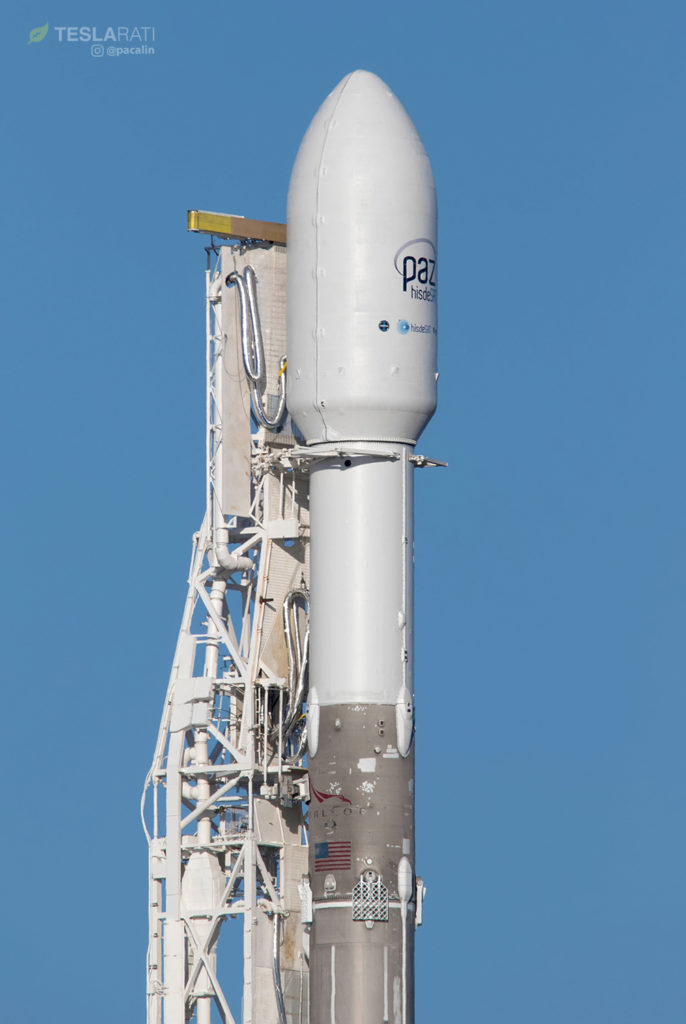
- SpaceX’s first Starlink prototypes launched in late February aboard a flight-proven Falcon 9 booster. (Pauline Acalin)
-
- SpaceX’s Starlink satellite constellation efforts could provide the company with valuable experience that can be applied around Mars. (unofficial logo by Eric Ralph)
Gwynne Shotwell, COO of SpaceX, gave an official statement on the FCC’s authorization of Starlink, reiterating the company’s awareness of a huge amount of work ahead of any operational constellation.
“We appreciate the FCC’s thorough review and approval of SpaceX’s constellation license. Although we still have much to do with this complex undertaking, this is an important step toward SpaceX building a next-generation satellite network that can link the globe with reliable and affordable broadband service, especially reaching those who are not yet connected.”
As the SpaceX’s first foray into true electric propulsion and dedicated communications satellites, not to mention an array of cutting-edge technologies (optical/laser-based interlinks, advanced antenna tech, and more) presumed to be on board, it’s fair to assume that the public silence is indicative of a heads-down work ethic while Starlink engineers and technicians get a handle on the tasks before them and learn volumes about the manufacture and operation of advanced satellites. If they were to occur, failures or serious problems with these first two prototypes would, in fact, benefit SpaceX and strengthen all future prototype testing efforts, ultimately resulting in a more successful final product and happier customers in the long term.

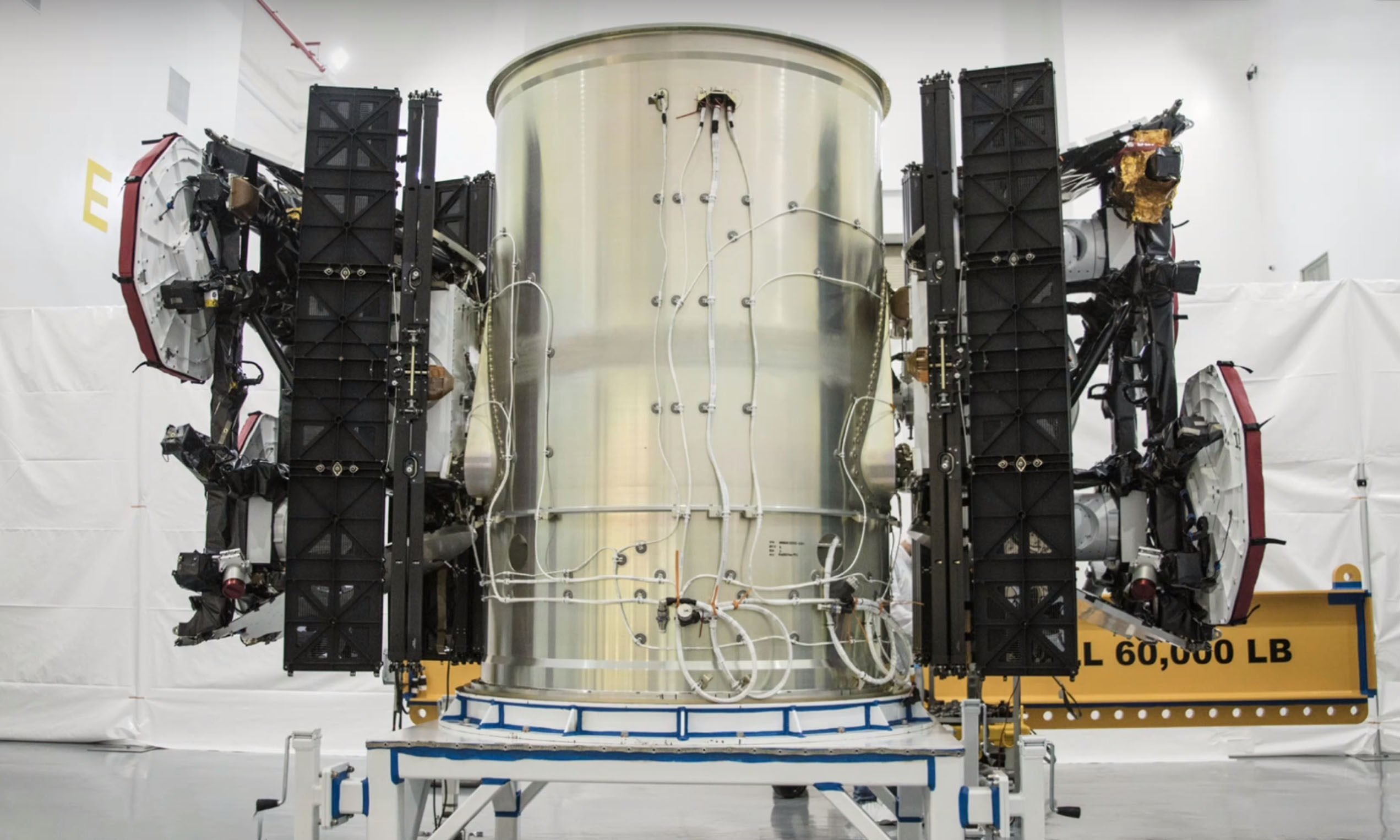
SpaceX’s first two Starlink prototype satellites are pictured here before their inaugural launch, showing off a thoroughly utilitarian bus and several advanced components. (SpaceX)
Although the FCC’s approval carries with it a number of conditional requirements of SpaceX, it is all but guaranteed that SpaceX will be able to satisfy those conditions and ensure that Starlink remains authorized, barring any significant and unforeseen legal challenges. Of those conditions, the most significant condition of note relates to a request for additional information from SpaceX on the company’s end-of-life and deorbit practices in order to guarantee that the constellation’s 4,000+ satellites do not become a space debris risk. The most serious threat to Starlink as it stands proposed today is the FCC’s decision to deny SpaceX a waiver for the requirement that 50% of any given LEO internet constellation must be launched six years after approval. In the case of the 4400+ satellite Starlink constellation, this would require SpaceX to launch more than 30 satellites a month for every month between now and March of 2024. Thankfully, the FCC approval acknowledges that it will reconsider SpaceX’s request for a waiver of this requirement in the future, once the design of Starlink has been finalized.
Correction: While the FCC’s final license grant appeared to deny a waiver requested by SpaceX for the requirement of launching 50% of the constellation within six years of licensing, the FCC has in fact already reconsidered this requirement [PDF] for uniquely large constellations out of its sheer impracticality. SpaceX should thus have some added flexibility in the pace of its deployment of Starlink.
Limited internet service from SpaceX’s Starlink constellation is not expected to begin before 2020 at the earliest. The FCC’s announcement can be read in the news release here [PDF] or in the full application approval here [PDF].
https://www.youtube.com/watch?v=v5-WCwZ4cSE
Follow us for live updates, behind-the-scenes sneak peeks, and beautiful photos from our East and West coast photographers.
Teslarati – Instagram – Twitter
Tom Cross – Twitter
Pauline Acalin – Twitter
Eric Ralph – Twitter


News
SpaceX readies Starship Flight 14 for a historic journey into uncharted territory
SpaceX finished Starship’s Flight 14 rehearsal, clearing the way for its first orbital flight Monday.

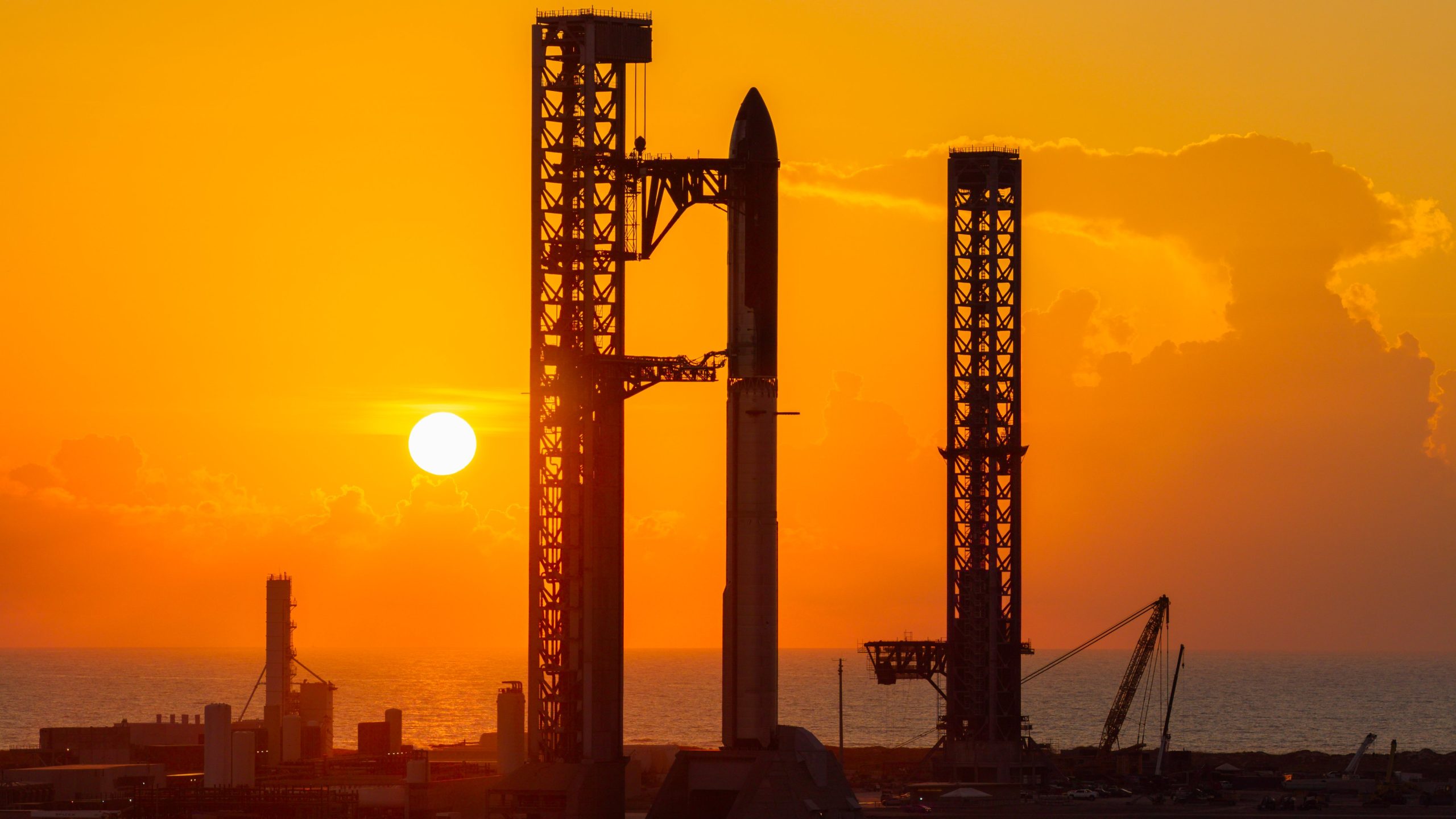
SpaceX has cleared one of the last hurdles before Starship’s first trip to orbit. The company posted on X Thursday afternoon that its launch rehearsal for Flight 14 was complete, keeping the mission on track for Monday, September 28. The launch window opens at 7:15 a.m. CT at Starbase, Texas, and runs for 75 minutes.
A wet dress rehearsal is essentially launch day without the launch. Crews fill Booster 21 and Ship 41 with thousands of tons of extremely cold propellant, run the countdown nearly to ignition, then drain everything back out. It lets engineers catch leaks or equipment problems before anything leaves the pad. SpaceX still needs a launch license from the FAA before the stack, which stands 407 feet tall, can fly.
Flight 14 matters because of where it is going. All 13 previous Starship flights followed a suborbital path, which works like throwing a ball extremely high and far: the vehicle reaches space, but it is always on a course that brings it back down within about an hour. This time, Ship 41 will perform a short engine firing called an orbital insertion burn roughly 25 minutes after liftoff, giving it enough speed to keep falling around Earth instead of back into it. SpaceX plans about six laps at an altitude near 275 kilometers (171 miles) over nearly 10 hours, as Teslarati detailed when the mission was first announced.
Launch rehearsal complete ahead of Starship Flight 14 pic.twitter.com/h5LBYyBqi4
— SpaceX (@SpaceX) September 24, 2026
Getting into orbit also means Starship has to prove it can get back out. The ship must relight a single Raptor engine in space to slow down for reentry. SpaceX says it will only attempt the orbital insertion burn after flight controllers confirm the hardware needed for that return burn has enough backup, and its flight plan includes health checks that could shorten the mission to two or five orbits.
Flight 14 is also the first to put working satellites into service. Flight 13 carried 20 Starlink V3 satellites in July, but they came back down with the ship because that mission never reached orbit. This time, 26 V3 satellites are meant to stay up and join the constellation within a few weeks. Together they add about 26 terabits per second of network capacity, which SpaceX says is roughly 10 times what a single Falcon 9 launch of older V2 Mini satellites adds. Three of them carry cameras that will photograph Starship’s heat shield in orbit to check for tile damage before reentry.
The hardware has changed too. Ship 41 flies with extra fasteners on tiles in the most vulnerable areas, fixes for gaps where superheated plasma slipped behind tiles, and curved tiles designed to reduce heating between them. Two tiles recovered from Ship 40 will fly again, the first reuse of any part of a Starship heat shield. Booster 21 carries better engine filtering and new relight software after ice clogged three center engines on the previous booster, leaving only eight of 13 engines to restart for its landing burn.
Ship 41 is targeting a splashdown in the Pacific Ocean west of Chile, a new recovery zone after several Indian Ocean landings, while Booster 21 aims for the Gulf. Neither will be caught by the tower on this flight. Elon Musk said in August that a ship catch was likely “in a few months.”
Elon Musk
Google just picked SpaceX for its first step into orbital AI
Google will launch its first Project Suncatcher AI satellite on SpaceX’s Transporter-18 rideshare next week.
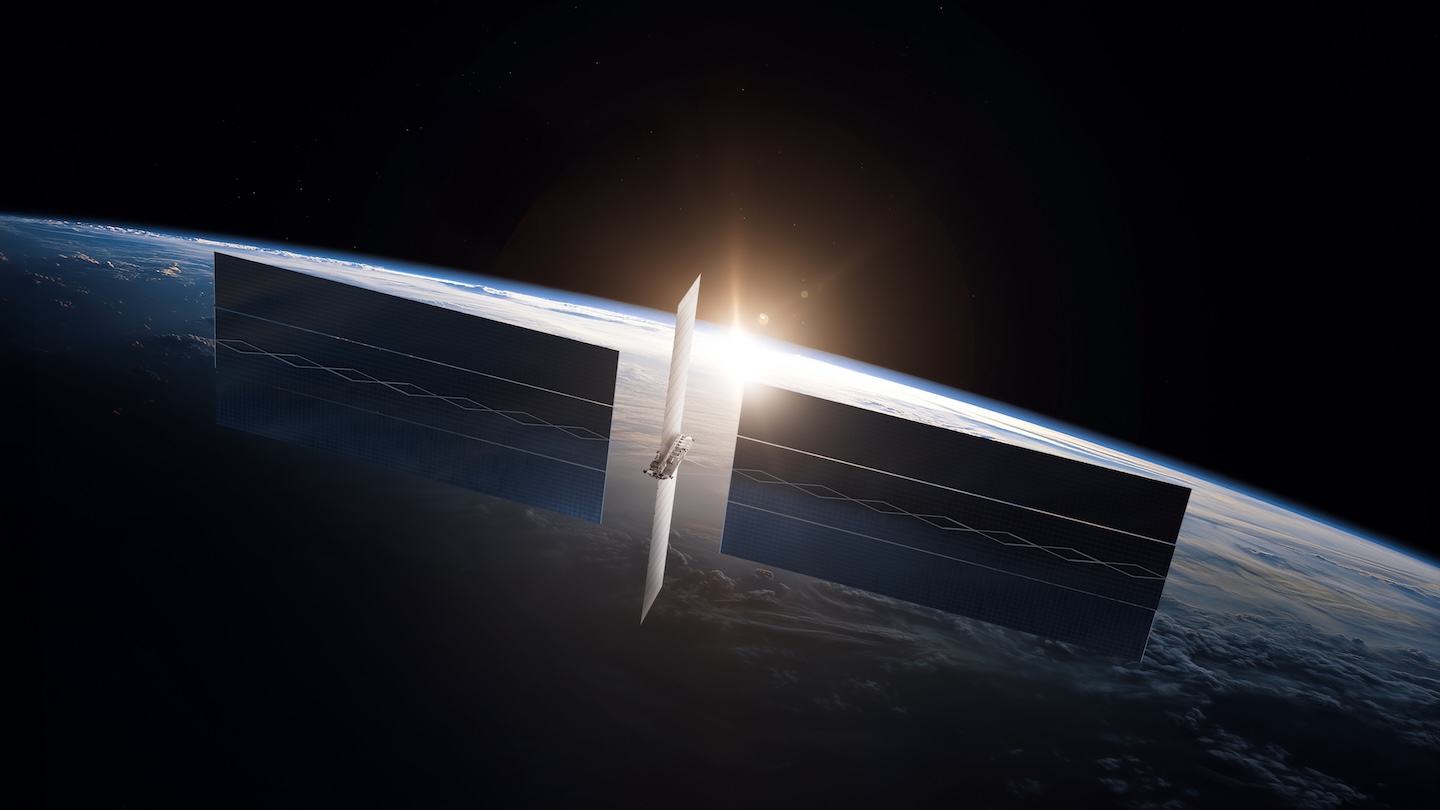
Google is about to put its own AI chips into orbit for the first time, and it is paying SpaceX to get them there.
The company said Thursday that the first in-orbit test of Project Suncatcher, its research effort to find out whether space can host large-scale AI computing, will fly next week on SpaceX’s Transporter-18 rideshare mission.
The satellite, called MVP, is about the size of a refrigerator and carries four of Google’s Tensor Processing Units, the same chips Google runs in its ground data centers. Google originally planned to launch two custom satellites in 2027, but chose to move faster by integrating its chips into a satellite.
MVP’s solar panels supply about one kilowatt of power, and Google will run Gemini models on the TPUs only in bursts of roughly 15 minutes before the chips shut down so the radiators can shed heat. In a blog post, Google said its Trillium TPUs survived vibration testing that mimicked sustained launch loads of up to 10g, with individual components seeing 50 to 100g, and handled a radiation dose greater than a five year mission would deliver.
SpaceX and Google mull massive partnership on Musk’s orbital data dream: report
Next week’s flight, slated for October 1, follows a relationship that became public in May, when Teslarati reported that Google was in talks with SpaceX for a launch deal tied to orbital data centers. Google also holds a stake of roughly 6% in SpaceX.
The two companies are chasing the same idea from very different starting points. SpaceX’s own orbital compute program is built around the AI1 satellite, a roughly 70 meter structure derived from Starlink V3 hardware that is designed for 150 kW of peak compute, about 150 times the power MVP will draw. Elon Musk has brushed off concerns about crowding orbit with those satellites, and SpaceX is building its Gigasat factory in Bastrop, Texas, to produce them, targeting an annualized rate of about 1 GW of space compute by the end of 2027.
Musk also posted on X on Thursday that “the amount of compute in space will obviously round up to 100% of all compute.”
Google has been more cautious in public. Its research estimates that launch prices need to fall below about $200 per kilogram before an orbital data center can compete with a ground facility on energy cost, a threshold the company believes could be reached around the mid 2030s. The Suncatcher team has said it expects the effort to remain a project rather than a product for years, which leaves the first real test of its hardware riding on a rocket from the company with the most aggressive timeline in the field.
News
NASA taps SpaceX for more astronaut missions as Boeing Starliner remains grounded
NASA just gave SpaceX a $946 million contract for three more astronaut missions through 2030.
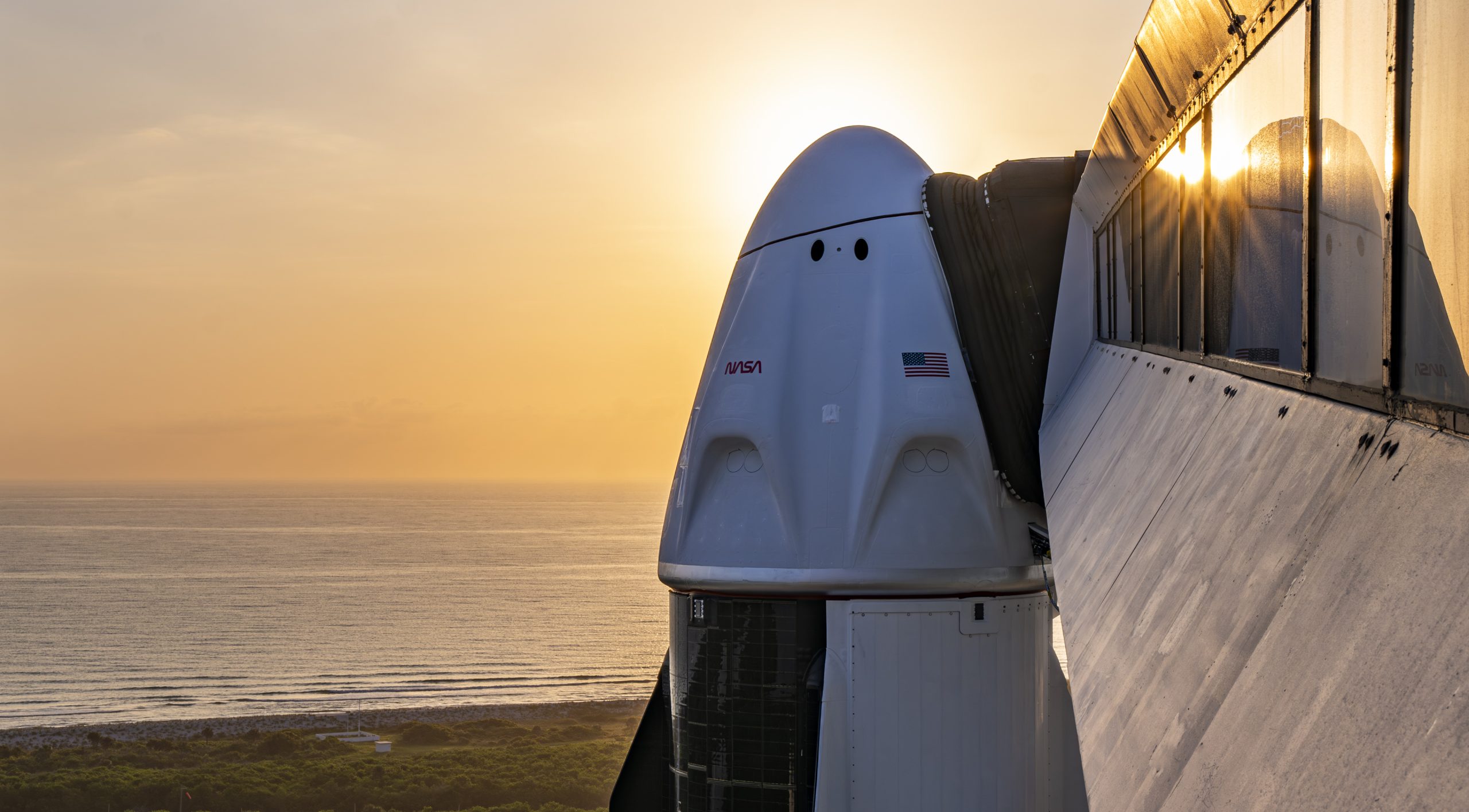
NASA has awarded SpaceX a $946 million contract modification covering three more astronaut missions to the International Space Station, according to an announcement the agency published Friday. The award adds Crew-15, Crew-16, and Crew-17 to SpaceX’s existing Commercial Crew Transportation Capability contract, bringing the agreement’s total value to $5.92 billion across 17 flights.
SpaceX confirmed the award on X, writing that it was excited for Falcon 9 and Dragon to launch NASA’s Crew-15, 16, and 17 missions to the Space Station from Florida. The new missions cover ground, launch, in orbit, and return operations, along with cargo transport and a lifeboat capability while docked at the station, and the period of performance runs through 2030.
We’re excited for Falcon 9 and Dragon to launch @NASA’s Crew-15, 16, and 17 missions to the @Space_Station from Florida https://t.co/Qm16vVK9F3 pic.twitter.com/drg3s7GtuM
— SpaceX (@SpaceX) September 18, 2026
The award follows a notice of intent NASA issued in May, when the agency first signaled it would purchase up to six additional post certification missions from SpaceX. Teslarati covered that filing at the time, noting NASA cited technical issues and schedule delays encountered by Boeing as a driving factor. Friday’s contract modification locks in three of those six missions, with the remaining three left open for NASA to award later, potentially to Boeing if Starliner clears certification.
Boeing’s CST-100 Starliner has still not flown an operational crew rotation mission for NASA. The spacecraft’s most recent crewed test flight in 2024 ended without the astronauts returning aboard Starliner, and the company has spent the time since working through thruster problems. SpaceX President Gwynne Shotwell said this week that SpaceX is not retiring Crew Dragon today, for sure, while stopping short of committing to fly it past 2030.
Crew-12 is currently docked at the space station, and NASA has said Crew-13 is targeting a launch in the coming weeks. The newly awarded Crew-15 through Crew-17 missions extend SpaceX’s role as NASA’s primary way of getting astronauts to and from orbit well into the back half of the decade, regardless of what happens with Starliner or Starship in the meantime.

SpaceX readies Starship Flight 14 for a historic journey into uncharted territory

Google just picked SpaceX for its first step into orbital AI


