SpaceX
SpaceX’s first Starship engine suffers “expected” damage during Raptor test fire

SpaceX CEO Elon Musk says that the first full-scale Starship engine to be tested has already been pushed to the point of damage less than three weeks after the campaign began, setting the stage for the second full-scale Raptor to take over in the near future.
According to Musk, while most of the damaged pathfinder Raptor’s components should still be easily reusable, the assembly of the second finalized engine is “almost done” and that Raptor will take over near-term testing rather than waiting for repairs to the first engine. This is undoubtedly an extraordinarily aggressive test program, particularly for such a new and cutting-edge rocket propulsion system, but these latest developments are ultimately far more encouraging than they are concerning.
Merlins. The max chamber pressure run damaged Raptor SN 1 (as expected). A lot of the parts are fine for reuse, but next tests will be with SN 2, which is almost done.
— Elon Musk (@elonmusk) February 21, 2019
Although the Raptor engine family began integrated subscale static fires way back in September 2016, SpaceX’s propulsion team finalized Raptor’s baseline design and completed assembly, shipment, and an integrated static fire of the first full-scale engine on February 3rd, considerably less than three weeks before Musk took to Twitter. Aside from confirming that the new Raptor had been damaged during its most recent static fire several days prior, Musk indicated that the failure (unsurprisingly) was primarily attributed to the engine reaching the highest chamber pressures yet.
Raptor’s main combustion chamber (the bit directly above the nozzle) has been designed to nominally operate at and reliably withstand extraordinary pressures of 250+ bar (3600+ psi), performance that demands even higher pressures in the components that feed hot methane and oxygen gas into Raptor’s combustion chamber. One prime example hinted at by Musk in a 2018 tweet is its oxygen preburner, used to convert liquid propellant into a high-velocity gas that can then feed a dedicated oxygen turbopump. Aside from the absurdly corrosive environment created by extremely hot gaseous oxygen, the preburner must also survive pressures that could peak as high as 800+ bar, or 12,000 psi.
-
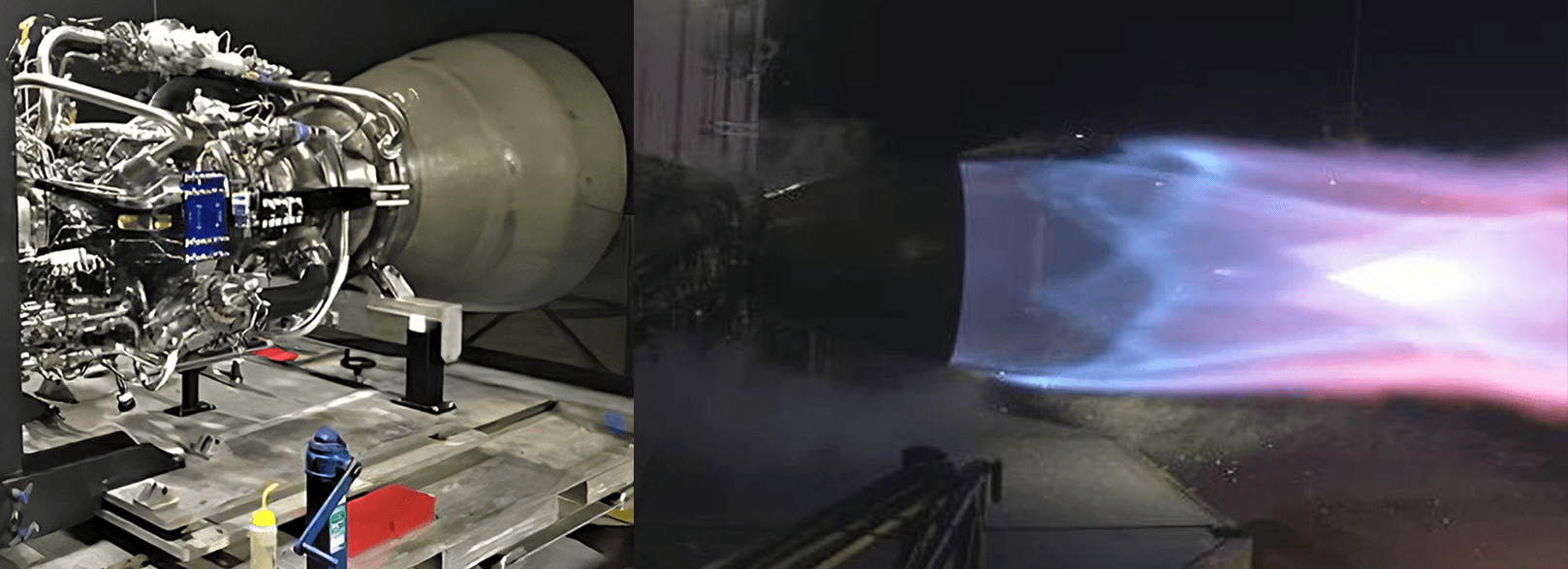
- SpaceX’s world-class rocket propulsion team has been progressing through early full-scale Raptor tests at an incredible speed. (SpaceX)
-
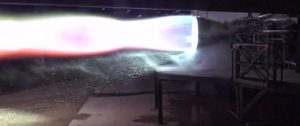
- Full-scale Raptor’s first static fire test, February 3rd. (SpaceX)
-
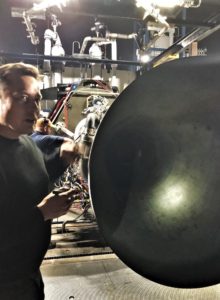
- Raptor’s business end with a Musk-for-scale. (Elon Musk)
-
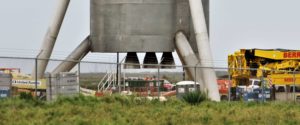
- Starship revealed a trio of Raptor mockups when SpaceX technicians moved the assembly from stand to ground. (NSF – bocachicagal)
-
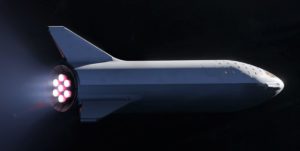
- A September 2018 render of Starship (then BFS) shows one of the vehicle’s two hinged wings/fins/legs. (SpaceX)
-
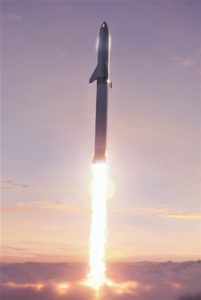
- BFR (2018) breaks through a cloud layer shortly after launch. (SpaceX)
A lack of technical detail means that it’s hard to know what thrust or main chamber pressure Musk had in mind when referring to exotic alloys that would be needed to survive those pressures, but the performance statistics of a Raptor with a preburner operating at 800+ bar would probably outstrip anything Musk has thus far described. In other words, it’s safe to assume that Raptor has probably not been pushed to those performance levels just yet, although it’s still a distant possibility. More likely is that 800+ bar in the oxygen preburner is an extreme stretch-goal that will take concerted research, development, and optimization to achieve, with Raptor having suffered damage somewhere below those levels while still reaching eye-watering performance figures.
— Elon Musk (@elonmusk) February 4, 2019
For an engine as complex as Raptor, there are countless dozens of potential failure modes the appearance of which would come as little surprise for an engine just days into full-scale testing. Above all else, the Raptor test schedule held by SpaceX’s world-class propulsion team – be it self-motivated or driven by reckless management-by-spreadsheet – has been fast-paced in the extreme, taking the first high-performance Raptor ever built from standstill to more than 90% thrust and chamber pressures of almost 270 bar (3900 psi) in – quite literally – less than one week. In the same period of time, more than half a dozen static fire tests (ranging from 1-10 seconds) were performed.
Within a few days of that February 10th milestone, in which Raptor reached chamber pressures comparable with the most advanced modern engines (namely RD-180/190/191), the engine was apparently pushed dramatically higher still, reaching a chamber pressure (and thus thrust) that wrought damage on some of the more sensitive parts of the engine’s plumbing. Despite the fact that the second production Raptor is apparently already “almost done”, Musk suggested that it would already feature changes (of unknown gravity) to mitigate the failure modes experienced by Raptor SN01.
SN2 has changes that should help
— Elon Musk (@elonmusk) February 21, 2019
In an industry where NASA and contractors like Aerojet-Rocketdyne will spend months between static fire tests of Space Shuttle engines that have each literally flown multiple (if not) dozens of missions to orbit and have a demonstrated performance and reliability record that is measured in the hundreds of thousands of seconds, the speed and agility of SpaceX’s Raptor development and test program is breathtaking. What remains to be seen is just how comparably reliable and successful the end results (i.e. operational Raptor) will be, but an attitude that actively accepts and even pursues testing to destruction can ultimately only serve to benefit the finished product at the cost of destroyed hardware and many on-ground lessons learned the hard ways.
Given the immense success of SpaceX’s Merlin family of engines and the aggressive strategy of development and continuous improvement that brought it from Merlin 1A to 1D and MVacD, SpaceX is clearly not fumbling around in the dark when it comes to Raptor R&D.
Check out Teslarati’s newsletters for prompt updates, on-the-ground perspectives, and unique glimpses of SpaceX’s rocket launch and recovery processes!


News
SpaceX readies Starship Flight 14 for a historic journey into uncharted territory
SpaceX finished Starship’s Flight 14 rehearsal, clearing the way for its first orbital flight Monday.

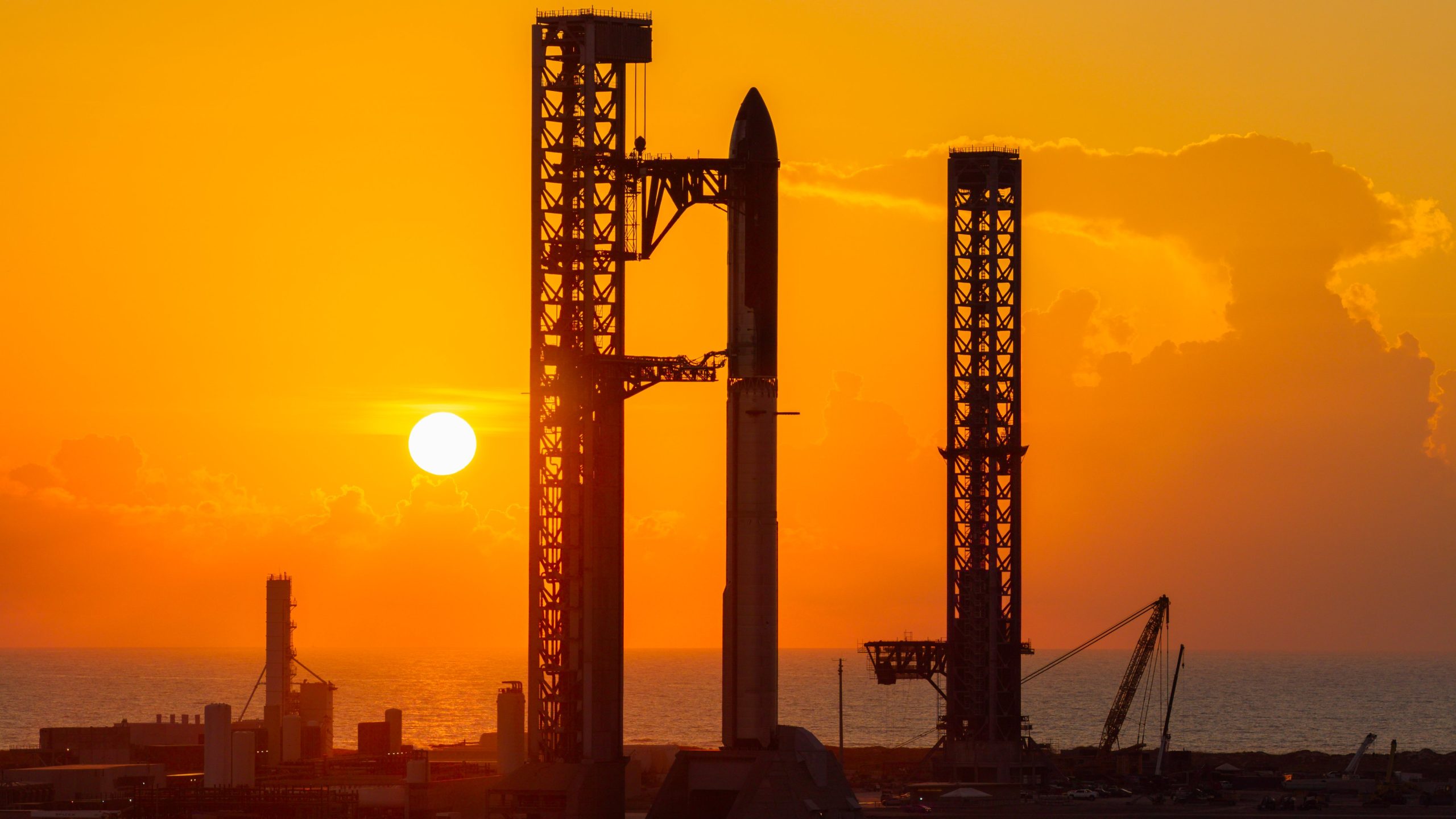
SpaceX has cleared one of the last hurdles before Starship’s first trip to orbit. The company posted on X Thursday afternoon that its launch rehearsal for Flight 14 was complete, keeping the mission on track for Monday, September 28. The launch window opens at 7:15 a.m. CT at Starbase, Texas, and runs for 75 minutes.
A wet dress rehearsal is essentially launch day without the launch. Crews fill Booster 21 and Ship 41 with thousands of tons of extremely cold propellant, run the countdown nearly to ignition, then drain everything back out. It lets engineers catch leaks or equipment problems before anything leaves the pad. SpaceX still needs a launch license from the FAA before the stack, which stands 407 feet tall, can fly.
Flight 14 matters because of where it is going. All 13 previous Starship flights followed a suborbital path, which works like throwing a ball extremely high and far: the vehicle reaches space, but it is always on a course that brings it back down within about an hour. This time, Ship 41 will perform a short engine firing called an orbital insertion burn roughly 25 minutes after liftoff, giving it enough speed to keep falling around Earth instead of back into it. SpaceX plans about six laps at an altitude near 275 kilometers (171 miles) over nearly 10 hours, as Teslarati detailed when the mission was first announced.
Launch rehearsal complete ahead of Starship Flight 14 pic.twitter.com/h5LBYyBqi4
— SpaceX (@SpaceX) September 24, 2026
Getting into orbit also means Starship has to prove it can get back out. The ship must relight a single Raptor engine in space to slow down for reentry. SpaceX says it will only attempt the orbital insertion burn after flight controllers confirm the hardware needed for that return burn has enough backup, and its flight plan includes health checks that could shorten the mission to two or five orbits.
Flight 14 is also the first to put working satellites into service. Flight 13 carried 20 Starlink V3 satellites in July, but they came back down with the ship because that mission never reached orbit. This time, 26 V3 satellites are meant to stay up and join the constellation within a few weeks. Together they add about 26 terabits per second of network capacity, which SpaceX says is roughly 10 times what a single Falcon 9 launch of older V2 Mini satellites adds. Three of them carry cameras that will photograph Starship’s heat shield in orbit to check for tile damage before reentry.
The hardware has changed too. Ship 41 flies with extra fasteners on tiles in the most vulnerable areas, fixes for gaps where superheated plasma slipped behind tiles, and curved tiles designed to reduce heating between them. Two tiles recovered from Ship 40 will fly again, the first reuse of any part of a Starship heat shield. Booster 21 carries better engine filtering and new relight software after ice clogged three center engines on the previous booster, leaving only eight of 13 engines to restart for its landing burn.
Ship 41 is targeting a splashdown in the Pacific Ocean west of Chile, a new recovery zone after several Indian Ocean landings, while Booster 21 aims for the Gulf. Neither will be caught by the tower on this flight. Elon Musk said in August that a ship catch was likely “in a few months.”
Elon Musk
Google just picked SpaceX for its first step into orbital AI
Google will launch its first Project Suncatcher AI satellite on SpaceX’s Transporter-18 rideshare next week.
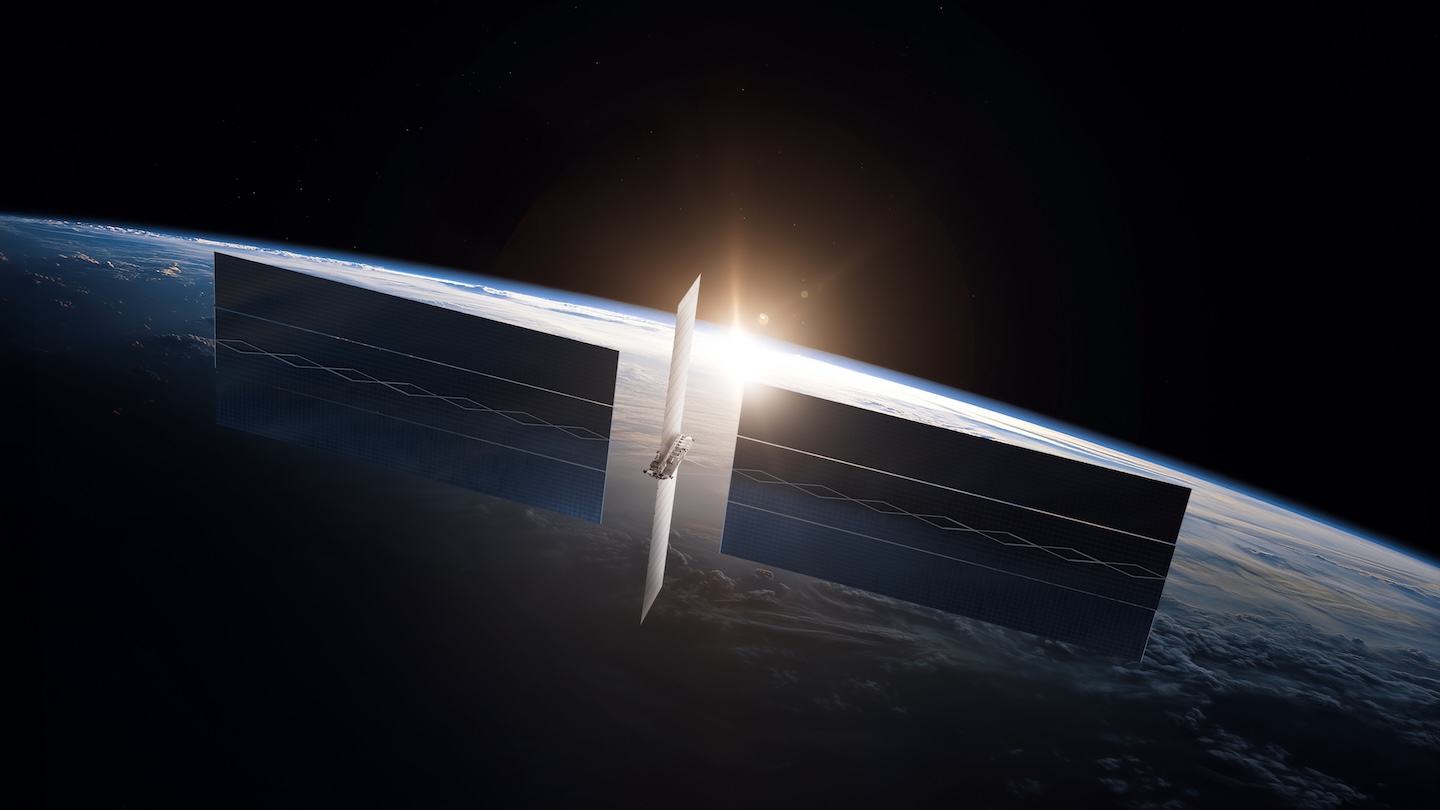
Google is about to put its own AI chips into orbit for the first time, and it is paying SpaceX to get them there.
The company said Thursday that the first in-orbit test of Project Suncatcher, its research effort to find out whether space can host large-scale AI computing, will fly next week on SpaceX’s Transporter-18 rideshare mission.
The satellite, called MVP, is about the size of a refrigerator and carries four of Google’s Tensor Processing Units, the same chips Google runs in its ground data centers. Google originally planned to launch two custom satellites in 2027, but chose to move faster by integrating its chips into a satellite.
MVP’s solar panels supply about one kilowatt of power, and Google will run Gemini models on the TPUs only in bursts of roughly 15 minutes before the chips shut down so the radiators can shed heat. In a blog post, Google said its Trillium TPUs survived vibration testing that mimicked sustained launch loads of up to 10g, with individual components seeing 50 to 100g, and handled a radiation dose greater than a five year mission would deliver.
SpaceX and Google mull massive partnership on Musk’s orbital data dream: report
Next week’s flight, slated for October 1, follows a relationship that became public in May, when Teslarati reported that Google was in talks with SpaceX for a launch deal tied to orbital data centers. Google also holds a stake of roughly 6% in SpaceX.
The two companies are chasing the same idea from very different starting points. SpaceX’s own orbital compute program is built around the AI1 satellite, a roughly 70 meter structure derived from Starlink V3 hardware that is designed for 150 kW of peak compute, about 150 times the power MVP will draw. Elon Musk has brushed off concerns about crowding orbit with those satellites, and SpaceX is building its Gigasat factory in Bastrop, Texas, to produce them, targeting an annualized rate of about 1 GW of space compute by the end of 2027.
Musk also posted on X on Thursday that “the amount of compute in space will obviously round up to 100% of all compute.”
Google has been more cautious in public. Its research estimates that launch prices need to fall below about $200 per kilogram before an orbital data center can compete with a ground facility on energy cost, a threshold the company believes could be reached around the mid 2030s. The Suncatcher team has said it expects the effort to remain a project rather than a product for years, which leaves the first real test of its hardware riding on a rocket from the company with the most aggressive timeline in the field.
News
NASA taps SpaceX for more astronaut missions as Boeing Starliner remains grounded
NASA just gave SpaceX a $946 million contract for three more astronaut missions through 2030.
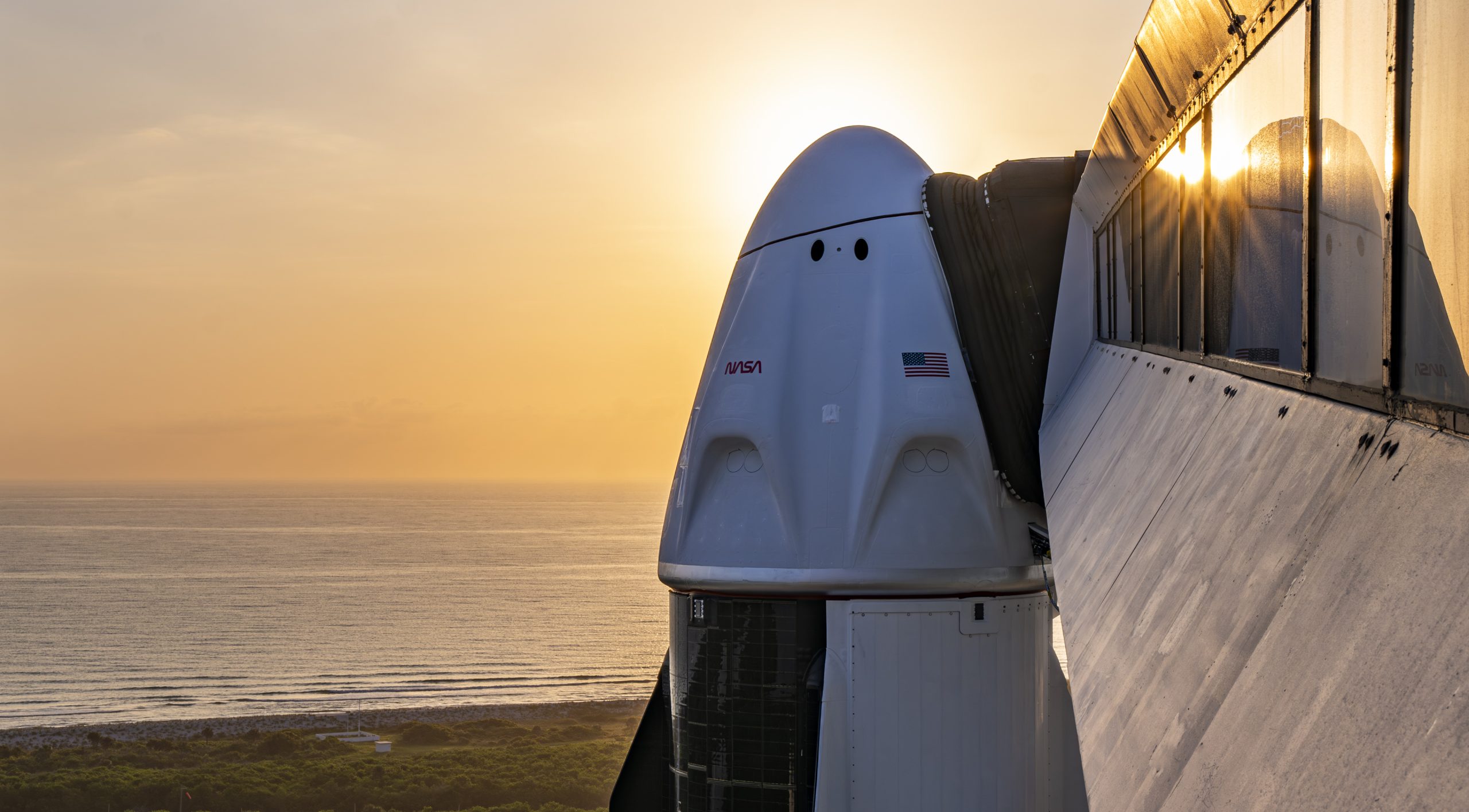
NASA has awarded SpaceX a $946 million contract modification covering three more astronaut missions to the International Space Station, according to an announcement the agency published Friday. The award adds Crew-15, Crew-16, and Crew-17 to SpaceX’s existing Commercial Crew Transportation Capability contract, bringing the agreement’s total value to $5.92 billion across 17 flights.
SpaceX confirmed the award on X, writing that it was excited for Falcon 9 and Dragon to launch NASA’s Crew-15, 16, and 17 missions to the Space Station from Florida. The new missions cover ground, launch, in orbit, and return operations, along with cargo transport and a lifeboat capability while docked at the station, and the period of performance runs through 2030.
We’re excited for Falcon 9 and Dragon to launch @NASA’s Crew-15, 16, and 17 missions to the @Space_Station from Florida https://t.co/Qm16vVK9F3 pic.twitter.com/drg3s7GtuM
— SpaceX (@SpaceX) September 18, 2026
The award follows a notice of intent NASA issued in May, when the agency first signaled it would purchase up to six additional post certification missions from SpaceX. Teslarati covered that filing at the time, noting NASA cited technical issues and schedule delays encountered by Boeing as a driving factor. Friday’s contract modification locks in three of those six missions, with the remaining three left open for NASA to award later, potentially to Boeing if Starliner clears certification.
Boeing’s CST-100 Starliner has still not flown an operational crew rotation mission for NASA. The spacecraft’s most recent crewed test flight in 2024 ended without the astronauts returning aboard Starliner, and the company has spent the time since working through thruster problems. SpaceX President Gwynne Shotwell said this week that SpaceX is not retiring Crew Dragon today, for sure, while stopping short of committing to fly it past 2030.
Crew-12 is currently docked at the space station, and NASA has said Crew-13 is targeting a launch in the coming weeks. The newly awarded Crew-15 through Crew-17 missions extend SpaceX’s role as NASA’s primary way of getting astronauts to and from orbit well into the back half of the decade, regardless of what happens with Starliner or Starship in the meantime.

SpaceX readies Starship Flight 14 for a historic journey into uncharted territory

Google just picked SpaceX for its first step into orbital AI


