News
LIVE BLOG: Tesla Battery Day and Annual Shareholder Meeting 2020 updates

This year’s Annual Shareholder Meeting will be one for the books, partly due to the fact that it’s followed immediately by Battery Day, a highly-anticipated event that’s been more than a year in the making. Both events are incredibly important for the company, though the hype surrounding Battery Day has been quite extraordinary. Part of this is due to speculations that the event would unveil Tesla’s next-generation battery cells, which would be key to rolling out the company’s next-generation of vehicles like the Cybertruck, the Semi, and the new Roadster.
For the Annual Shareholder Meeting, investors would have the opportunity to ask the electric car maker a number of key questions about its operations and initiatives for the future. As per inquiries gathered by investor communication platform Say, TSLA shareholders are looking to find more information about the company’s plans for a number of projects, including the rollout of vehicle-to-grid technologies and battery recycling efforts, among others.
The following are live updates from Tesla’s 2019 annual shareholder meeting. Fellow Teslarati reporter Dacia Ferris and I will be updating this article in real-time, so please keep refreshing the page to view the latest updates on this story.
Simon 16:20 PT – And that’s a wrap! Thanks for joining us for today’s love blog. Till the next event!
Dacia 16:20 PT – History has been made!!!! Thanks for joining us!! ‘Til next time…
Dacia 16:20 PT – “Everything is wrong, it’s a question of how wrong, per Elon. Come tell us how wrong we are!” <– closing remarks, ha!
Simon 16:18 PT – That was pretty inspiring. Seems like the main theme of the event is that Tesla needs all the help it can get to accomplish is actual mission. Transitioning to sustainable energy is no joke, and more hands are needed.
Dacia 16:18 PT – The diversity of industries applicable to Tesla’s manufacturing is cited. Even golf balls, apparently. Hmmm…
Dacia 16:16 PT – Scott on the stage has been handling Elon since 2005. Someone give that man a medal!
Dacia 16:14 PT – Honks up for the Battery Day presentation team!!
Dacia 16:13 PT – Team (and Elon especially) feels they’ve already answered the questions on Say for the most part. A bit of time taken to scroll…Elon makes the pitch to come work for Tesla if you want to solve hard engineering problems.
Dacia 16:10 PT – Elon again says it will be about 3 years before they’ll have a car that’s on par, or cheaper, than comparable ICE cars.
Dacia 16:09 PT – “It’s not like Tesla is minting money. Our valuation makes it seem like we do, but we don’t,” Elon says, referring to the affordability of its vehicles and how it helps scaling. It’s a valuable car vs. how much money people ACTUALLY have to buy it. If people can’t afford it even tho they want it, it’s a wash.
Dacia 16:08 PT – “Stationary storage has barely begun, converting the fleets to electric has barely begun,” Elon adds, referring to future Tesla engineers who may be interested in solving hard problems.
Dacia 16:07 PT – “The sheer amount of hardcore engineering done at Tesla is insane,” Elon says in response to a question about how the company acquired all the talent that achieves the amazing Battery Day type innovations.
Dacia 16:06 PT – Honestly, vehicle-to-grid sounds good, but it has much lower utility than people think, Elon adds. Your car isn’t always plugged in.
Dacia 16:04 PT – Looking at questions from Say now… We can certainly do vehicle-to-grid, a future software incorporation, Elon says. (top question on Say)
Dacia 16:03 PT – A musician asks about future opportunities from Tesla. Elon refers to the AI future of the cars and how developing more entertainment and work productivity tools will be key. Kind of a long-term thing. Robotaxis mean you’ll want stuff to do while riding…that’s where music may fit in.
Dacia 16:01 PT – “If you’re smart about your materials choices, the spice will continue to flow,” a Tesla team member adds to the “other” manufacturer discussion. EV makers are incentivizing miners to expand their businesses.
Dacia 15:58 PT – Elon is having a hard time with answers…seems to have answered them more or less already…summing up soon?
Dacia 15:57 PT – “The spice must flow. The new spice,” Elon says in response to a question about what other EV manufacturers are facing if they don’t follow Tesla’s lead. (summarized a bit)
Simon 15:55 PT – Highlighting the importance of sustainable innovations, Elon also mentioned that Starship’s propulsion will largely be through liquid oxygen, which could be produced through renewable means.
Dacia 15:54 PT – The needs are about 50/50 in terms of TWh’s needed for global sustainability. Half for the grid, half for transportation.
Dacia 15:53 PT – Lots of companies in China doing well with EVs, cell production, and storage…not so much in the US, but we’ll get there, Elon says. Cites Tesla’s freely-available patents. “We keep trying to say you need to do this, or you won’t exist in the future.”
Dacia 15:51 PT – “It’s a false dichotomy to say it’s about prosperity OR sustainability,” Elon defends his mission. “A sustainable energy is gonna be lower cost, not higher cost, than fossil fuels.”
Dacia 15:50 PT – Ross Gerber question about climate change – what will the direct impact be if Tesla achieves all these things? “It’s a science question,” Elon says. His original interest predates the climate change issue, was more about running out of oil. Now that accessing fossil fuels is expanded even more, cheaper gas etc., it’s more about the CO2 problem. As a percentage of the total global fleet, EVs are less than 1%, practically nothing. The insane amount of work is almost unimaginable. “You gotta have batteries,” he circles back.
Dacia 15:46 PT – The orders are gigantic for Cybertruck. “We stopped counting (preorders),” Elon Says. Doesn’t know what the volumetric demand will be. Designing to meet the American spec… can’t do it in the rest of the world.
Dacia 15:45 PT – Car camping question… Climate control to the back of the Cybertruck. “We’ll try to do that,” Elon says.
Dacia 15:45 PT – ICE vehicles will be a collector’s thing in the future, Elon says. Won’t exist, no industry.
Simon 15:44 PT – A/C in the back of the Cybertruck? Why not, says Elon. That’s one spacious camping space, to be honest.
Dacia 15:42 PT – “We will be manufacturing cells in Berlin,” Elon confirms. (again?)
Dacia 15:41 PT – Q&A starting. HVAC systems by Tesla maybe coming next year. They have a lot going on right now…ha. They can base it on Model Y’s heat pump, could enable an absolutely tiny HVAC that can be modularly expanded.
Dacia 15:40 PT – 1:30:3 Laguna Seca for Model S Plaid!!! Nice red color!!! Prob another 3 seconds coming off that time, per Elon. YOU CAN ORDER NOW. (Plaid Model S) Available end of next year…
Simon 15:39 PT – Whoa, we may be looking at Tesla’s $25,000 car soon. I’m getting jitters. Oh, and Model S Plaid! The thing went around Laguna Seca in 1:30.3 seconds. Range of 520+ miles, and 200 mph top speed as well.
Dacia 15:38 PT – To make this sustainable energy achievement, EVERYONE needs to be working on these problems.
Simon 15:35 PT – With all these innovations, Tesla could increase range by 54%, achieve a dollar per kilowatt reduction of 56%, and cut investment cost per GWh by up to 69%. Elon noted that of course, the investment cost reduction as 69%. It’s just appropriate. Long-term, Tesla is aiming to produce 20M vehicles per year.
Dacia 15:32 PT – Tesla’s structural batteries serve as a dual-purpose structure, fundamental like in airplanes where wings are used as fuel tanks. Now has a lot more space in the battery. HUGE. Structural batteries effectively make the battery weight negative!
Dacia 15:29 PT – Single piece casting is crucial… Tesla had to develop their OWN alloy with no heat treating or coatings.
Dacia 15:28 PT – Now we’re up to 49% kWh reduction!!! Last part next…
Dacia 15:27 PT – “We are starting our pilot full-scale recycling factory next quarter at Giga Nevada.”
Dacia 15:25 PT – There’s a massive amount of lithium on Earth – “Enough lithium in Nevada to electrify the entire US auto fleet to electric,” Elon explains.
Simon 15:25 PT – Looks like there’s another big factory coming to middle America. The graphic shows the factory just above Texas. Is Tulsa, Oklahoma in the running for this facility? The Big F*cking Field in Tulsa may have a second wind, after all.
Dacia 15:24 PT – Tesla to going to build its own North American cathode factory as part of the battery lines. Cool!!
Dacia 15:22 PT – Dacia 15:22 PT – Elon explaining how the current process of making batteries is mostly rooted in legacy stuff – “Just the way it was done.” Tesla is aiming at this faulty stuff. Tesla is dramatically simplifying cathode production, 76% cheaper, 0 wastewater, way cleaner.
Dacia 15:19 PT – High nickel, zero-cobalt cathode reduces cost by 15%. (I’m losing track of all these %). Tesla will diversify the cathodes it uses due to low nickel supply.
Dacia 15:18 PT – Iron-based battery graphic: WHAT IS UNDER THE SHEET IN THAT GRAPHIC??
Dacia 15:17 PT – Cathode is bookshelf, Lithium is books. (Love the free tuition here.) Must not crumble or get gooey. More technical: Tesla wants to use raw metallurgical silicon vs complex processing. Tesla is basically designing the cell to tolerate anode wear and tear and coating it with fancy science things to make it more resilient. Anode alone cuts cost per kWh by 5%, just $1.20 per kWh.
Dacia 15:15 PT – (why didn’t I pay more attention in chemistry?) Elon says, “with silicon, the cookie crumbles and gets gooey.” (Coooooookie crisp, but in reverse). Tesla wants to use raw metallurgical silicon vs complex processing. Some radical cost reductions too, like $1.20 per kWh for silicon anodes.
Dacia 15:14 PT – Getting closer to 50% reduction in KWh cost – form factor + factory efficiency = 32% reduction in cost per kWh.
Dacia 15:12 PT – We will continue to use our current cell suppliers. Our factory will SUPPLEMENT. (for now??) We aim to make 100 GWh by 2022, 3 TWh per year by 2030. “Allows us to make a lot more cars and a lot more stationary storage.”
Simon 15:13 PT – Elon and Drew now talk about Silicon, which is “awesome and inexpensive.”
Dacia 15:11 PT – The terms for Tesla dominance: 75% reduction in factory footprint. We can get 1 TWh in less space than 150 GWh is currently made now.
Simon 15:10 PT – From a volume standpoint, Tesla could get far more output from a space smaller than Giga Nevada. That’s up to 1 TWh from a space that’s smaller than what is needed for 100 GWh in Nevada. Looks like the target is 3 TWh by 2030. Elon notes that Tesla could probably achieve this goal earlier, but he feels that Tesla could attain it by 2030.
Dacia 15:09 PT – Tesla is aiming to be the best at manufacturing anywhere on Earth. Damnnnn, son. Game. Set. MATCH!! Everyone will manufacture but not as well as Tesla will, Elon bets.
Dacia 15:08 PT – Volumetric efficiency is astoundingly low in factories all around the world, including Tesla Fremont. (Elon)
Dacia 15:07 PT – A bit about why it’s so hard to do all this/improve what exists: “dry film” process gets rid of the wet solvent process that is incredibly complex and factory volume-hungry. Also, there’s 10x reduction in factory footprint and 10x reduction in energy cost per cell with what’s being done by Tesla.
Dacia 15:06 PT – We will probably be on revision 6 or 7 by the time high production is reached. There’s a revision to the machines/process every 3 or 4 months, Elon explains.
Simon 15:06 PT – Now onto the battery cell assembly line. Elon and Drew talk about how one line could make 20 GWh, a 7x increase in line output. That’s some serious volume. Elon notes that it’s like the rocket equation.
Dacia 15:05 PT – Battery plant status, per Elon: At the pilot plant level, it is CLOSE to working… It’s working but not at a high yield.
Simon 15:03 PT – Tesla was inspired by bottling and paper factories for its Roadrunner line. Drew discusses the steps in the development of a battery cell production line. He also provides a walkthrough of electrodes’ wet process. It’s a pretty long system. Cue the dry electrode process. The video makes it seem simple, though Elon notes that the dry electrode process is actually very hard.
Dacia 15:02 PT – How to make a battery: 1) Electrode – Wet Process…
Dacia 15:00 PT – Gotta admit, this looks like a bottling factory. I need a Diet Coke suddenly…
Dacia 14:59 PT – It will take about a year to reach the 10 GWh capacity…annualized rate…with the pilot plant… TESLA IS ALREADY MAKING THESE. Woo!
Dacia 14:57 PT – “It’s really a huge pain in the ass to have tabs, from a production standpoint.” Very colorful Elon choice of words here. That’s a very pretty picture they’re showing, too. Tesla-brand batteries squeeeeeee! 5x the energy, 6x the power, 15% more range “just with the form factor alone.” Cuts the cost per kWh by 14% too.
Dacia 14:55 PT – The ‘tabless’ feature is being explained – a sweet spot between battery size and energy capacity; no one else is doing that but Tesla. It’s a dramatically shorter path length with tabless, power to weight ratio is also better.
Simon 14:58 PT – It’s a 4680 cell. That’s 5x the energy, 6x the power, 15% more range “just with the form factor alone.”
Simon 14:56 PT – Elon notes that getting rid of tabs in a cell is a big deal. It may seem like a simple evolution in cell design, but it took tons of effort to make the actual cells work. “It’s a huge pain the *ss to have tabs from a production standpoint,” Musk said.
Dacia 14:55 PT – Okay that shirt doesn’t look like that at all. I WANT A NEW SHIRT.
Dacia 14:54 PT – “ANY FOOL can build a bigger (battery) form factor.” Musk at his finest.
Dacia 14:53 PT – We’re deleting the pointless extra zero at the end of battery numbers, Elon says.
Dacia 14:52 PT – Me watching the visuals (singing in head) “And the beat (battery rolling) goes on…”
Simon 14:52 PT – Drew and Elon provide a brief outline on how batteries work. By moving to 2170 cells from the 18650 cells, Tesla was able to gain about 50% more energy. Cue a slide which states that bigger cylindrical cells are great. But there are challenges involved. Drew mentions Tesla’s tabless cell design, which makes manufacturing really simple.
Dacia 14:51 – This will halve the cost of the KWh in batteries. Time for school…
Dacia 14:50 PT – 1) Make best battery-powered cars in the world; 2) Make best batteries FOR cars. Genius!
Simon 14:50 PT – Drew notes that Tesla has already proven that it can produce the best electric vehicles in the world. The time has now come to do the same for batteries.
Dacia 14:49 PT – Also need to make more affordable car, which we don’t yet have and will make in the future. Must lower the cost of batteries. The curve of cost per KWh batteries isn’t coming down fast enough, Elon explains. We’re plateauing.
Dacia 14:48 PT – .15 TWh = 1 Gigafactory, need 135 Gigafactories (Nevada size) to equal that. Not acceptable. It’s not really about money, it’s about effort and how efficient it is. (Uhm…efficient batteries…here we gooooo!)
Simon 14:48 PT – Elon notes that ultimately, batteries today are too small and too costly to achieve 20 TW a year. Twenty terawatts is the point where sustainability can be achieved, says Elon. Even Giga Nevada, which could achieve 100 GWh or so, would be far too small to make any meaningful impact in the shift towards sustainable energy.
Dacia 14:47 PT – Elon: You need 10 TWh of production for 10-15 years to transition the world grid – that’s a lot of batteries.
Dacia 14:46 PT – FIRST GOAL – Terawatt factory level production. TERA IS THE NEW GIGA, per Elon.
Simon 14:45 PT – Elon shows a path towards a terawatt-hour scale battery production. “Tera is the new Giga,” he says. Elon notes that this is key to achieving sustainability.
Dacia 14:43 PT – Good things are happening on a lot of levels (RE: the power grid), but that needs to go faster, Elon says. Energy generation, storage, and EVs are the three major factors in the sustainable transition.
Dacia 14:42 PT – “This presentation is about accelerating the time to sustainable energy,” Elon announces. “Running this climate experiment is insane.”
Simon 14:42 PT – Elon Musk and drew Baglino take the stage. Here goes Battery Day. Elon starts by stating that accelerating the advent of sustainable energy really matters now. He discusses some stats on climate change, as well as some numbers about Tesla’s accomplishments today.
Dacia 14:41 PT – Everyone back in the cars…video looks profound…where is the sound? (no those aren’t lyrics, but rhyming FTW)
Dacia 14:40 PT – So, I’d be even more impressed if there were some tailgating setups out there. Did anyone check for Teslaquila under the seats??
Dacia 14:37 PT – Tesla Twitterworld abuzz about that “a few other things” comment from Elon. Plaid-shirted Elon, Plaid version of a Tesla hidden behind that stage…
Dacia 14:27 PT – Step change improvements in progress towards sustainable energy coming soon! #roadrunnerEarthDay
Dacia 14:27 PT – Elon concludes the pre-Battery Day presentation which followed the pre-pre Battery Day stuff. (I’m sure these things were labeled, but let’s be real about why we’re here, folks.)
Simon 14:27 PT – Battery Day is starting, and Elon says that there are some surprises that everyone would probably love. He highlights that Tesla’s main mission is to accelerate the advent of sustainable energy. Time for a short break.
Dacia 14:26 PT – Elon confirms: Texas is FASTER in construction progress than Berlin.
Dacia 14:25 PT – On improvements to the Tesla factory: Designing the machine that makes the machine is harder than designing the machine itself, Elon says (and has said before). Elon has tweeted about academic detractors regarding this type of thing, too. Making things work is much harder than talking about making them work. Dur.
Dacia 14:24 PT – AUTOPILOT’s FULL FSD VERSION IS COMING IN A MONTH (or so), per Elon. This is super exciting. But of course, we have to see if this will end up being Elon Time.
Dacia 14:23 PT – Elon is on ‘bleeding edge’ of advancements in AP, but got stuck in a local maximum. Had to totally rewrite some things to get out. This is that labeling patent stuff that has published recently. “You get basically a surround video…to label,” Musk explains.
Dacia 14:21 PT – Probability of injury 10x better than industry average is a priority for us, Elon says.
Dacia 14:20 PT – “Tesla factories are becoming safer,” Elon notes as well.
Simon 14:21 PT – Elon highlights Tesla’s safety record and Autopilot’s improvements. He emphasizes how Tesla’s 3D approach to labeling matters in the grand scheme of things. Looks like dramatic improvements for Autopilot and FSD will be coming soon.
Dacia 14:20 PT – The grids around the world are ‘greening’ – it’s happening much faster than people realize, Elon says. This is true – even Steven Crowder of “Change My Mind” has come around to that fact.
Simon 14:18 PT – Elon discusses the 2019 Extended Impact Report. He notes that Tesla always tries to do the right thing, and if the company doesn’t, that means that something needs to be fixed. He also highlighted how Tesla is still growing despite the market being a mess right now.
Dacia 14:16 PT – Holy honks, Batman.
Simon 14:16 PT – The Tesla CEO explains why it is important to have production facilities in areas that are close to their target market. This is why Giga Texas and Giga Berlin makes sense, according to Elon Musk.
Simon 14:13 PT – Kinda loving how the Battery Day attendees are “clapping” by honking their cars. Elon seems to be amused by it. He also mentions that Giga Shanghai is going for a production rate of 1 million cars a year. That’s a very ambitious statement, but it does make sense. 500k each for Model 3 and Model Y, perhaps.
Simon 14:10 PT – Elon notes that Tesla is getting better in bringing its cars to the market. This is quite accurate, with a good example being the Model Y. Let’s hope that the same will be true for the Cybertruck.
Dacia 14:07 PT – It’s on like Donkey Kong!! Bring on the Musk.
Simon 14:06 PT – And the annual shareholder meeting is ending… Elon is about to do a “year in review.” Elon is welcomed by honks from the fleet of Model 3s and Model Ys. The CEO seems to be in a good mood, praising Giga Shanghai’s team for its rapid buildout.
Dacia 14:06 PT – This meeting is a bit front-loaded with um, what would you call that? Can’t put my finger on the word…
Dacia 14:05 PT – Comment from United Steel Workers: Tesla should unionize. (basically in so many words)
Dacia 14:03 PT – Comments from Michael Overbaugh – advertising dollars, if they need to be spent, should focus on test drives. It’s the best seller – “butts in seats.”
Dacia 14:02 PT – The cobalt supply issue is being aired out right now. Here’s hoping Battery Day will have some serious progress on that to report.
Simon 14:01 PT – Third proposal goes into alleged human rights violations, including unsafe COVID processes in Tesla’s factories. Accuses Tesla of also using child labor to get cobalt. This is false, as indicated in Tesla’s Impact Report. The company also does not use cobalt from mines that engage in child labor (whose output is very low in the grand scheme of things).
Dacia 14:00 PT – Definitely doesn’t feel like a super fun family dinner when arbitration is the topic. Yikes.
Simon 13:58 PT – Pretty interesting that one of the proposals point to Tesla lagging in diversity and racial equality procedures. Some skeletons being unearthed here. Or are there really bones to be unearthed. I mean, the company has ranked pretty well among LGBTQ employees.
Dacia 13:54 PT – “Why the proposal failed” explanations: I feel like I’m at dinner with my in-laws and two uncles start having a debate.
Dacia 13:53 PT – AGAIN they reject paid advertising. I’d totally pay for a Mad Men series where they represented Tesla only.
Dacia 13:51 PT – *plays 90s-era ‘Rock the Vote’ commercials in background*
Simon 13:45 PT – The Tesla Chair talks about a number of key topics. She places some emphasis on Tesla’s impact report and how the company works in line with its environmental goal. She also says her sincere goodbye to Steve Jurvetson, who has been on the board for a long time. She welcomes Hiro Mizuno, the new member of Tesla’s BoD.
Simon 13:43 PT – And it begins! Robyn Denholm takes the stage for some opening remarks. I have a feeling everyone’s just looking forward to finish the shareholder meeting quickly. Because you know, priorities *cough Battery Day *cough
Dacia 13:42 PT – Internet bets are soooo on right now. Million-mile battery looks to be an early fave!
Dacia 13:38 PT – Would be cool to see a Frunkpuppy show before these events, kind of like the Thanksgiving Parade and the dog show. I say before because… you know. #elontime
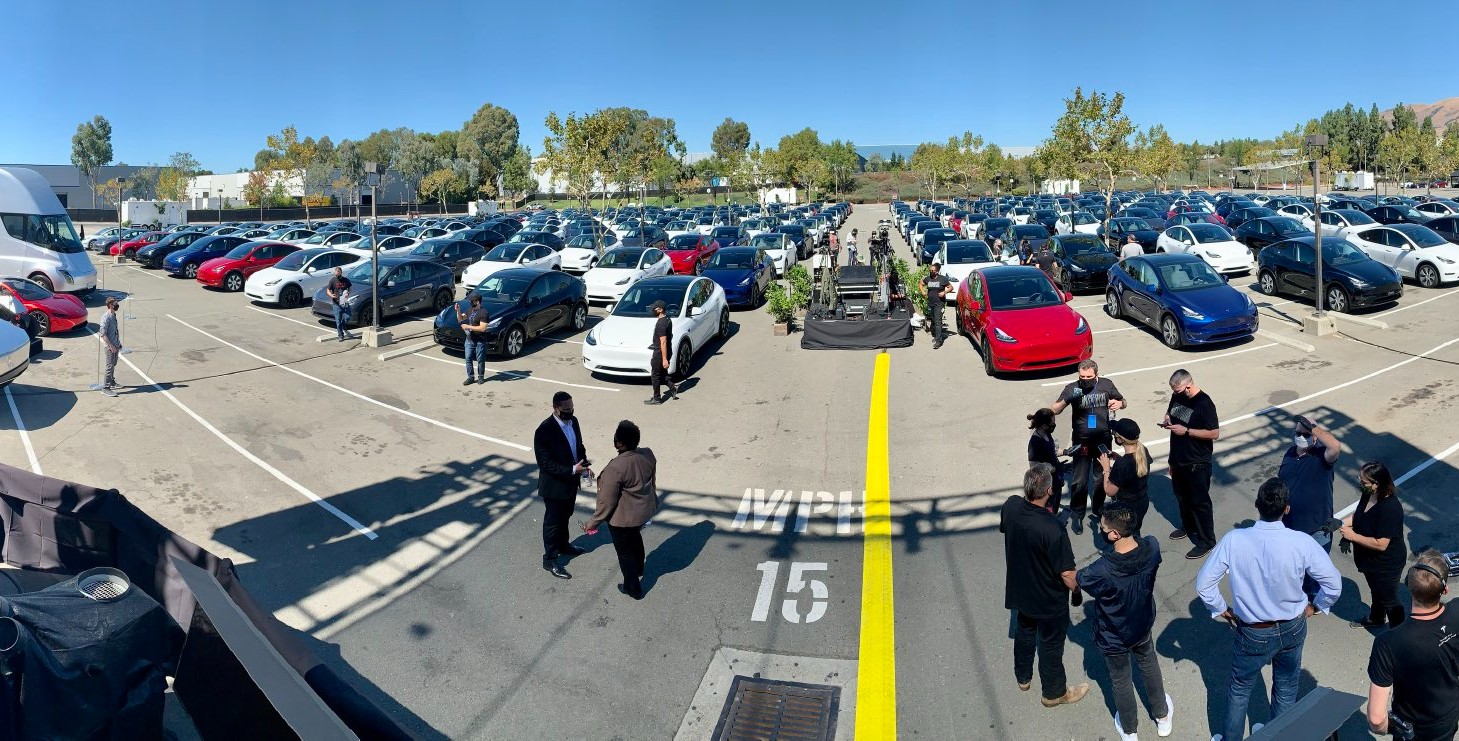
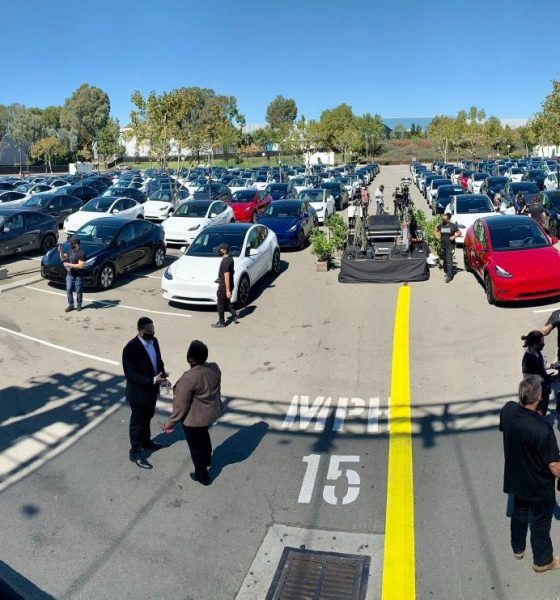
Simon 13:35 PT – Seems like there’s about 200 or so cars in the parking lot. Participants are just waiting for now, and they get to enjoy some A/C in the process.
Dacia 13:30 PT – Who gets the cleaning bill from all that mind blowing in the drive-in cars?
Simon 13:30 PT – And it’s starting. Looks like Tesla *may* have forgotten to turn on the sound for the video previews.
Simon 13:25 PT – There’s a covered trailer behind the Semi. The enthusiast in me is telling me that something interesting is inside that thing. Plaid Model S? Can’t wait for the event to start. Also, love that chill music.
Simon 13:20 PT – Pretty clever of Tesla to use a fleet of Teslas to follow social distancing guidelines. As per Steven Jurvetson, each Annual Shareholder Meeting and Battery Day participant is assigned a Tesla (looks like Model 3s and Model Ys) that they could watch the event from. Each vehicle will have a custom program to display the show on their central screens.
Simon 13:15 PT – Less than 15 minutes before the event. By the way, it’s been a while, but I’m glad to have Dacia back here live-blogging with us. 🙂 If Elon is being conservative, then this event may indeed blow our minds.


News
SpaceX readies Starship Flight 14 for a historic journey into uncharted territory
SpaceX finished Starship’s Flight 14 rehearsal, clearing the way for its first orbital flight Monday.

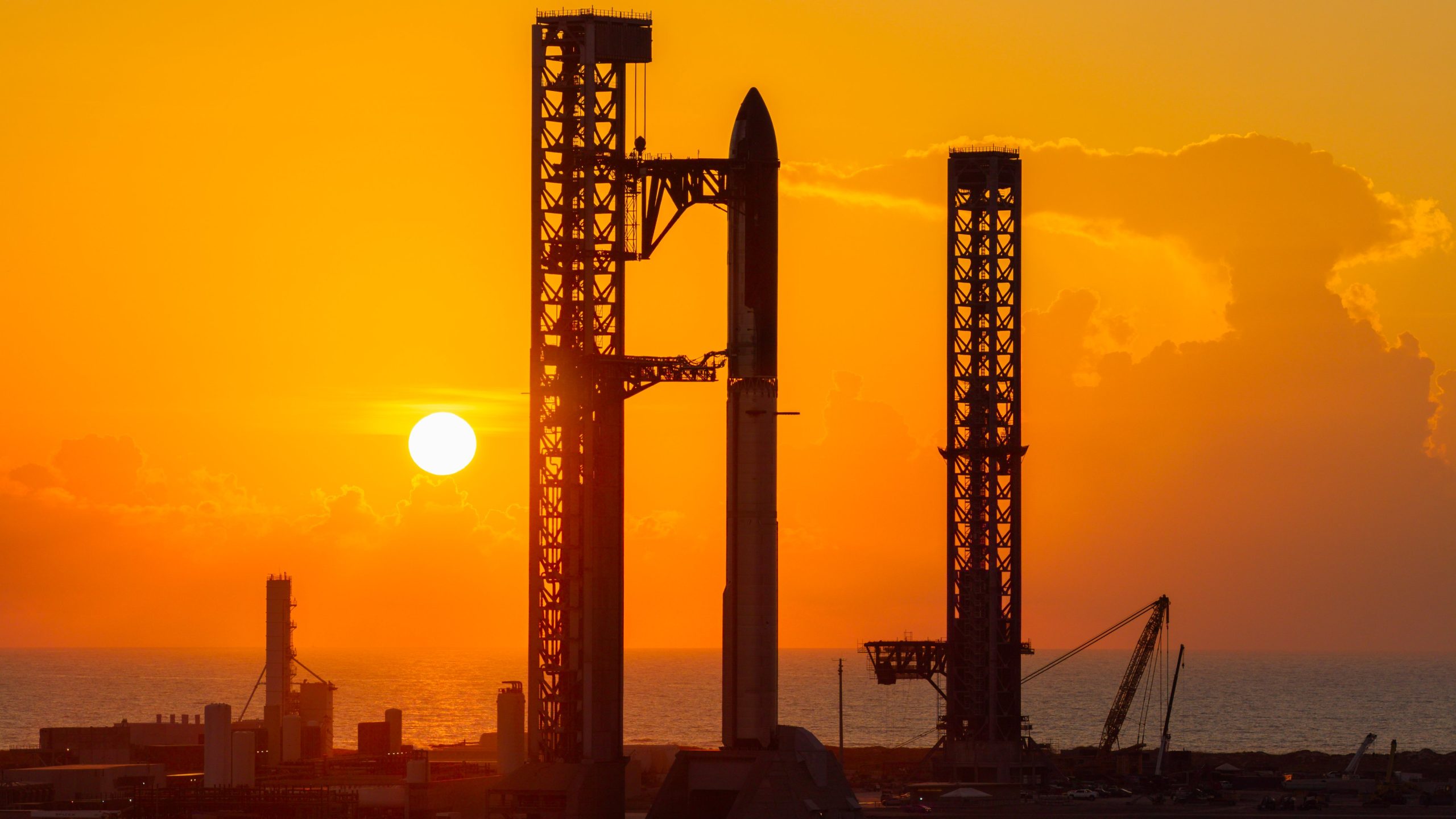
SpaceX has cleared one of the last hurdles before Starship’s first trip to orbit. The company posted on X Thursday afternoon that its launch rehearsal for Flight 14 was complete, keeping the mission on track for Monday, September 28. The launch window opens at 7:15 a.m. CT at Starbase, Texas, and runs for 75 minutes.
A wet dress rehearsal is essentially launch day without the launch. Crews fill Booster 21 and Ship 41 with thousands of tons of extremely cold propellant, run the countdown nearly to ignition, then drain everything back out. It lets engineers catch leaks or equipment problems before anything leaves the pad. SpaceX still needs a launch license from the FAA before the stack, which stands 407 feet tall, can fly.
Flight 14 matters because of where it is going. All 13 previous Starship flights followed a suborbital path, which works like throwing a ball extremely high and far: the vehicle reaches space, but it is always on a course that brings it back down within about an hour. This time, Ship 41 will perform a short engine firing called an orbital insertion burn roughly 25 minutes after liftoff, giving it enough speed to keep falling around Earth instead of back into it. SpaceX plans about six laps at an altitude near 275 kilometers (171 miles) over nearly 10 hours, as Teslarati detailed when the mission was first announced.
Launch rehearsal complete ahead of Starship Flight 14 pic.twitter.com/h5LBYyBqi4
— SpaceX (@SpaceX) September 24, 2026
Getting into orbit also means Starship has to prove it can get back out. The ship must relight a single Raptor engine in space to slow down for reentry. SpaceX says it will only attempt the orbital insertion burn after flight controllers confirm the hardware needed for that return burn has enough backup, and its flight plan includes health checks that could shorten the mission to two or five orbits.
Flight 14 is also the first to put working satellites into service. Flight 13 carried 20 Starlink V3 satellites in July, but they came back down with the ship because that mission never reached orbit. This time, 26 V3 satellites are meant to stay up and join the constellation within a few weeks. Together they add about 26 terabits per second of network capacity, which SpaceX says is roughly 10 times what a single Falcon 9 launch of older V2 Mini satellites adds. Three of them carry cameras that will photograph Starship’s heat shield in orbit to check for tile damage before reentry.
The hardware has changed too. Ship 41 flies with extra fasteners on tiles in the most vulnerable areas, fixes for gaps where superheated plasma slipped behind tiles, and curved tiles designed to reduce heating between them. Two tiles recovered from Ship 40 will fly again, the first reuse of any part of a Starship heat shield. Booster 21 carries better engine filtering and new relight software after ice clogged three center engines on the previous booster, leaving only eight of 13 engines to restart for its landing burn.
Ship 41 is targeting a splashdown in the Pacific Ocean west of Chile, a new recovery zone after several Indian Ocean landings, while Booster 21 aims for the Gulf. Neither will be caught by the tower on this flight. Elon Musk said in August that a ship catch was likely “in a few months.”
Elon Musk
Google just picked SpaceX for its first step into orbital AI
Google will launch its first Project Suncatcher AI satellite on SpaceX’s Transporter-18 rideshare next week.
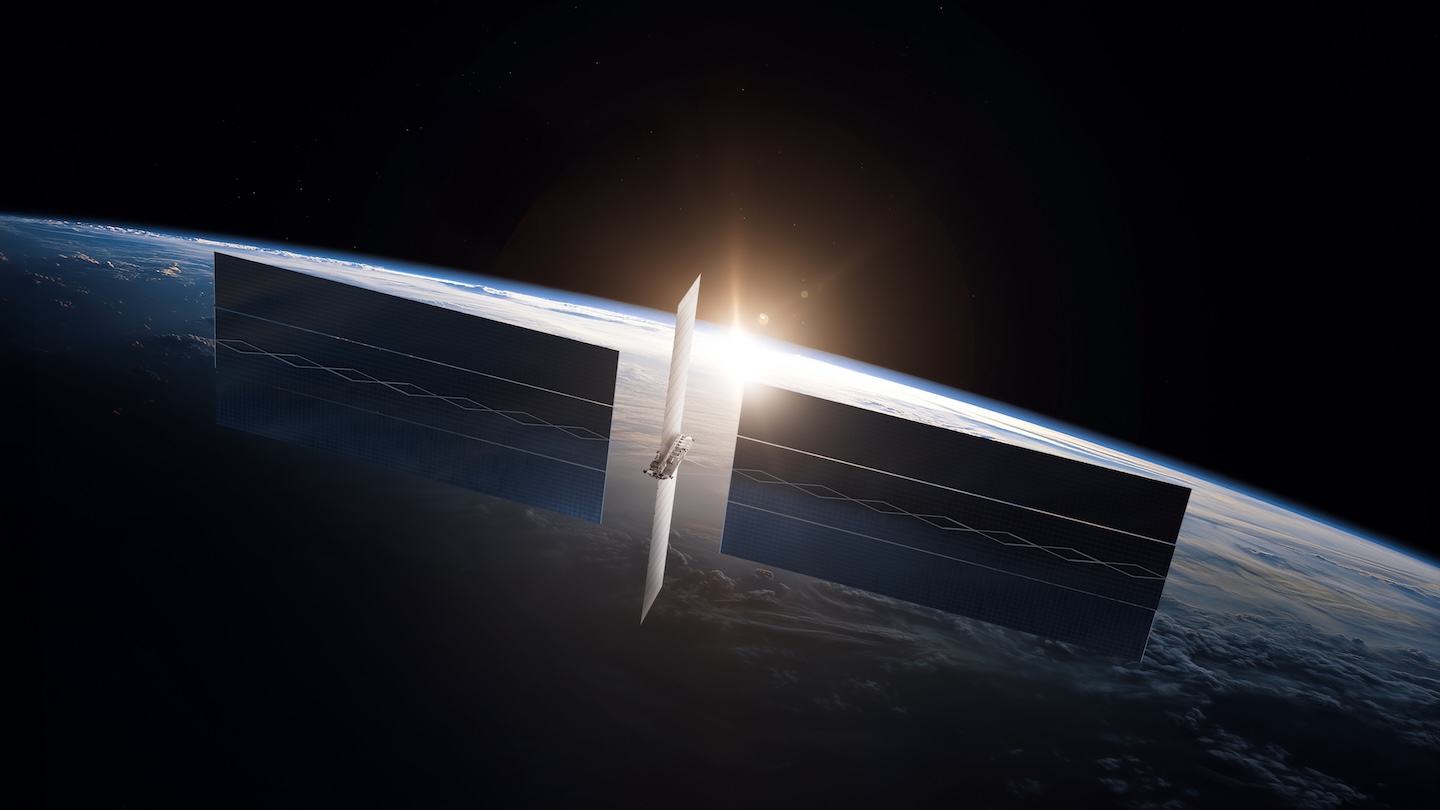
Google is about to put its own AI chips into orbit for the first time, and it is paying SpaceX to get them there.
The company said Thursday that the first in-orbit test of Project Suncatcher, its research effort to find out whether space can host large-scale AI computing, will fly next week on SpaceX’s Transporter-18 rideshare mission.
The satellite, called MVP, is about the size of a refrigerator and carries four of Google’s Tensor Processing Units, the same chips Google runs in its ground data centers. Google originally planned to launch two custom satellites in 2027, but chose to move faster by integrating its chips into a satellite.
MVP’s solar panels supply about one kilowatt of power, and Google will run Gemini models on the TPUs only in bursts of roughly 15 minutes before the chips shut down so the radiators can shed heat. In a blog post, Google said its Trillium TPUs survived vibration testing that mimicked sustained launch loads of up to 10g, with individual components seeing 50 to 100g, and handled a radiation dose greater than a five year mission would deliver.
SpaceX and Google mull massive partnership on Musk’s orbital data dream: report
Next week’s flight, slated for October 1, follows a relationship that became public in May, when Teslarati reported that Google was in talks with SpaceX for a launch deal tied to orbital data centers. Google also holds a stake of roughly 6% in SpaceX.
The two companies are chasing the same idea from very different starting points. SpaceX’s own orbital compute program is built around the AI1 satellite, a roughly 70 meter structure derived from Starlink V3 hardware that is designed for 150 kW of peak compute, about 150 times the power MVP will draw. Elon Musk has brushed off concerns about crowding orbit with those satellites, and SpaceX is building its Gigasat factory in Bastrop, Texas, to produce them, targeting an annualized rate of about 1 GW of space compute by the end of 2027.
Musk also posted on X on Thursday that “the amount of compute in space will obviously round up to 100% of all compute.”
Google has been more cautious in public. Its research estimates that launch prices need to fall below about $200 per kilogram before an orbital data center can compete with a ground facility on energy cost, a threshold the company believes could be reached around the mid 2030s. The Suncatcher team has said it expects the effort to remain a project rather than a product for years, which leaves the first real test of its hardware riding on a rocket from the company with the most aggressive timeline in the field.

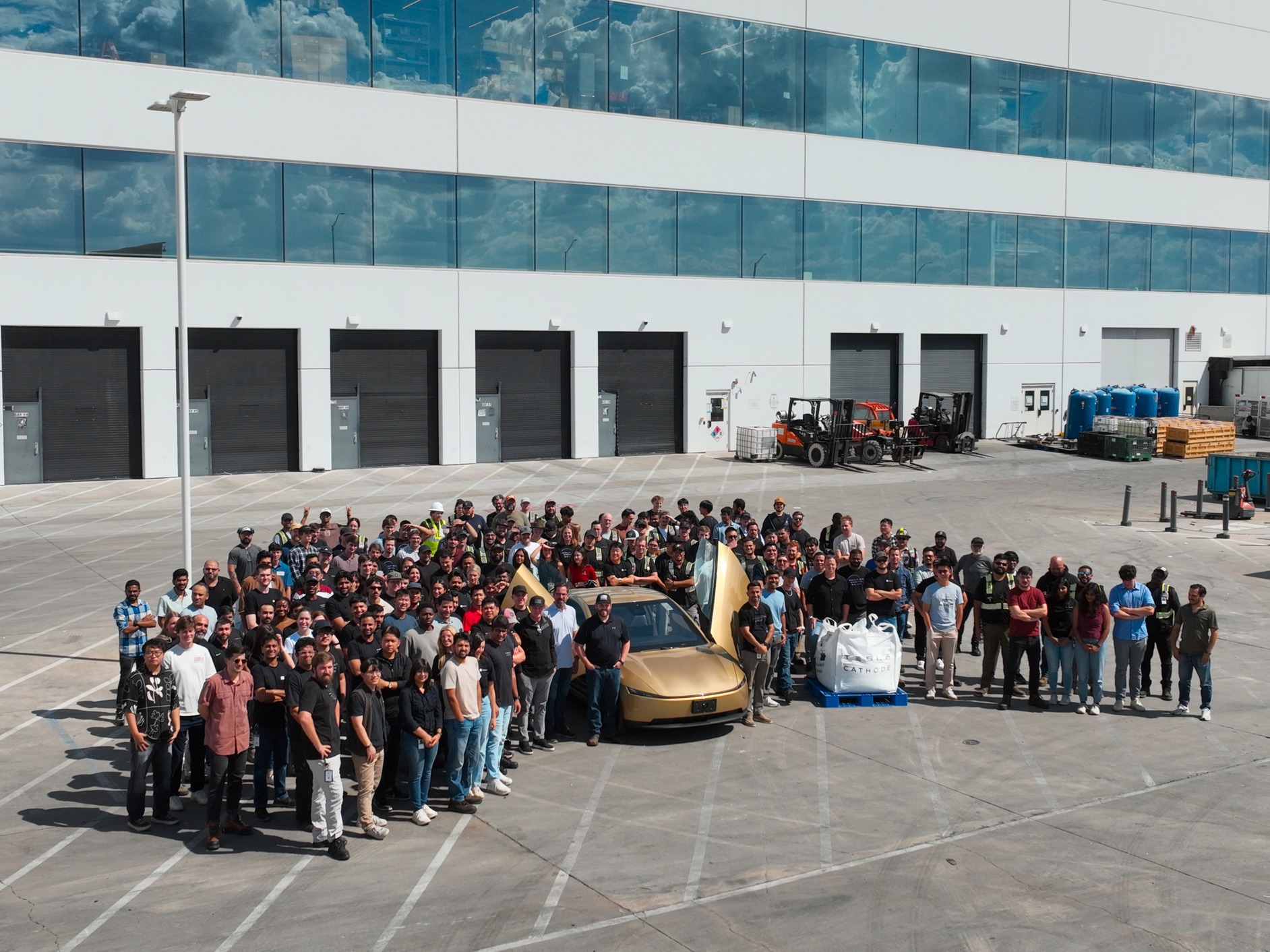
Tesla has taken another concrete step toward owning its battery supply chain, and it’s doing so with what is perhaps the most important vehicle in its short-but-storied history.
On September 23, Tesla announced that it has officially built the first Cybercab with cathode material produced in-house at the company’s first cathode plant in the U.S., and the first in the U.S. overall.
First Cybercab made using our in-house cathode material – from the first cathode plant in the Americas pic.twitter.com/X95aVXsT9H
— Robotaxi (@robotaxi) September 23, 2026
Active cathode material is the most expensive piece of a lithium-ion battery cell, and it often accounts for more than a third of cell cost. For years, the industry sourced a majority of it from Asia, but Tesla’s decision to make it in the United States bodes well for the Cybercab project. This is the latest chapter in Tesla’s vertical integration strategy, which began in public at Battery Day in 2020.
At the Battery Day Event, Elon Musk said the company would build a North American cathode plant and overhaul the process to cut costs and waste, while also making some of the most powerful and long-lasting cells in the industry.
The Austin facility took years to appear. Tesla filed permits for “Project Cathode” in 2022 on land near Giga Texas. By mid-2022, the building frame was up and Tesla later invested hundreds of millions of dollars as part of a larger expansion of the Giga Texas plant. The company stated it was operating the first large-scale cathode production facility in North America to supplement 4680 cell production.
One month later, that material reached a finished Cybercab.
Made with nickel cathode manufactured locally at Gigafactory Texas! https://t.co/DqMm5fZV3n
— Elon Musk (@elonmusk) September 24, 2026
The timing of this breakthrough is monumental for the Cybercab program. As Tesla officially launched the first Cybercab rides to the public earlier this month, production of the ride-hailing-geared vehicle is moving forward on the planned S-curve that CEO Elon Musk told everyone to expect.
Nevertheless, packs of Cybercab units have been spotted throughout the United States, in an effort to potentially activate the fleet as soon as the company gains regulatory approval in various geographic areas.
On top of that, Tesla owning the cathode step and pairing it with its own in-house lithium from the Gulf Coast refinery shortens the supply chain that once stretched thousands of miles and subjects every pack to fewer external price shocks and geopolitical risks.
Tesla is not yet independent of all of its foreign suppliers, as some precursor metals come from mines and chemical plants. But the first in-house cathode Cybercab shows the company is closing the most expensive and most concentrated gap in its battery production efforts. For a vehicle like Cybercab to operate at a high utilization within the Robotaxi network, that control over cost is so crucial.
It is arguably as important as the software that drives it.

SpaceX readies Starship Flight 14 for a historic journey into uncharted territory

Google just picked SpaceX for its first step into orbital AI


