News
Tesla’s Navigation Nightmare: Why the easiest part of FSD might be the hardest

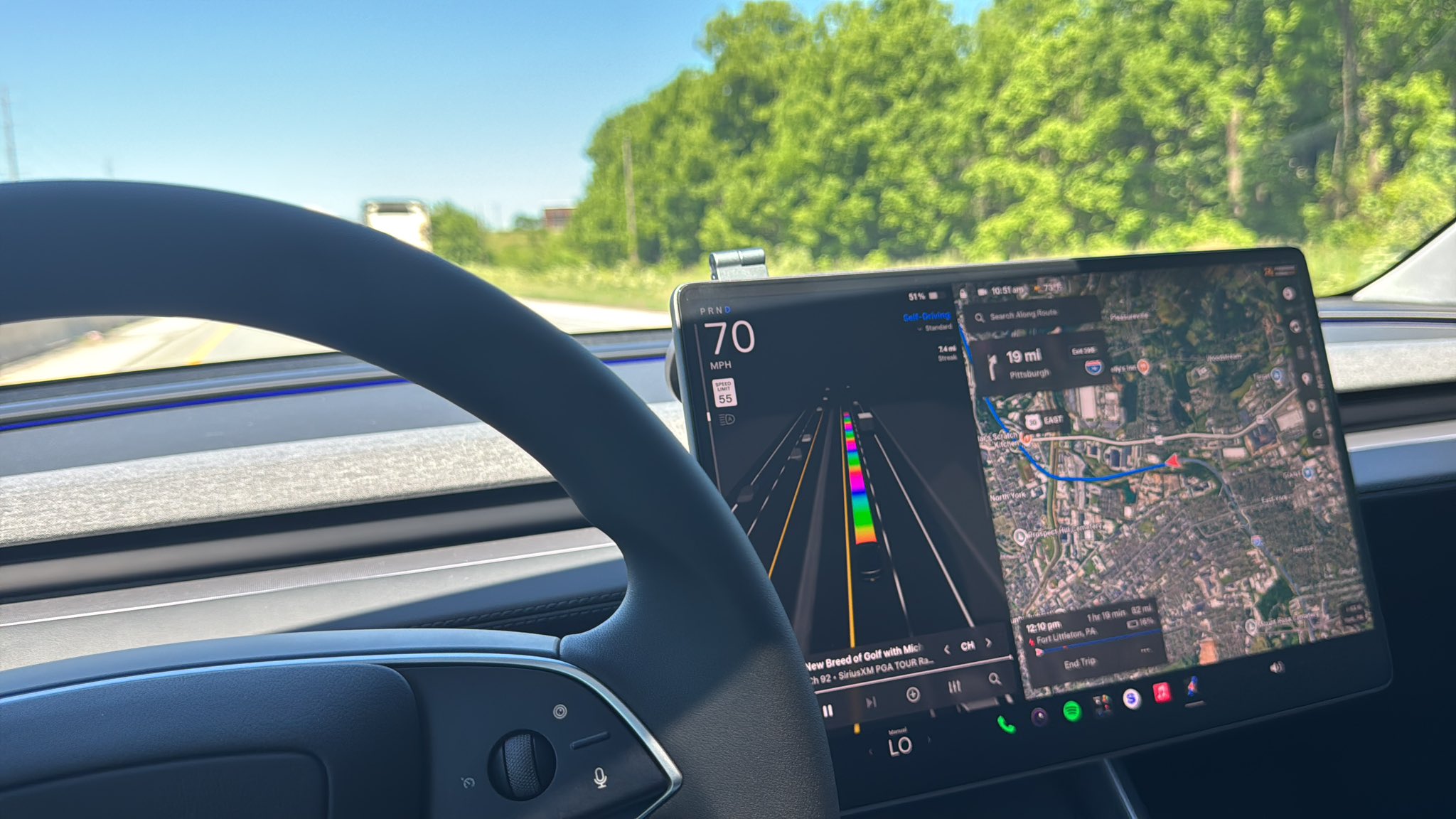
Turn-by-turn navigation is not new technology.
For over two decades, drivers have relied on Garmin, TomTom, and later smartphone apps like Google Maps and Waze to receive precise, reliable directions. These systems have guided millions safely through unfamiliar cities, highways, and backroads with remarkable effectiveness. They handle real-time traffic, construction detours, and complex intersections with minimal fuss.
Yet Tesla, the company that promised revolutionary Full Self-Driving (FSD), continues to struggle with this foundational capability. As FSD (Supervised) v14.3.4 has started rolling out to cars this week, navigation remains its glaring Achilles’ heel, undermining the entire autonomous vision.
Tesla Summon got insanely good in FSD v14.3.2 — Navigation? Not so much
Tesla’s FSD excels in many driving behaviors—smooth acceleration, confident lane changes in ideal conditions, and responsive handling of visible obstacles. However, when it comes to following a route accurately, the system falters repeatedly.
Owners report wrong turns, missed exits, inefficient routing through local roads instead of highways, phantom speed limit errors, and even directing vehicles to building rear entrances. Interventions for navigation issues often outnumber those for core driving maneuvers. Tesla has begun surveying owners specifically about these errors, acknowledging the problem after years of complaints.
Navigation is perhaps my biggest complaint when it comes to FSD, because sometimes, we do know better. Some of us have been living in our areas for our entire lives, but even those who have not have years or even decades of experience driving on local roads. We might know a little better about routing.
But the navigation mistakes are more than just FSD potentially taking a slightly different route that may or may not save you a few minutes. Sometimes, they’re genuinely mind-boggling.
This isn’t just annoying; it cascades into broader failures. A flawed route plan confuses the AI’s decision-making, leading to hesitant behavior, unnecessary disengagements, or dangerous maneuvers like attempting impossible U-turns or ignoring clear ramps. In a system meant to operate with minimal supervision, unreliable navigation erodes trust.
More often than not, false or plain incorrect navigation is what causes me to interrupt FSD operation. Unfortunately, I believe the latest FSD version is the worst example of it, and it leads me to believe that Tesla might be making some changes; they’ve just made them in the wrong direction.
It makes you wonder: Why is a company that has done so much with the progress of FSD and autonomy struggling so much with navigation, something that is not new and has been around a long time?
Multiple Data Sources
First, Tesla’s navigation relies on a fragile patchwork of multiple data sources—Google Maps, TomTom, OpenStreetMap, Valhalla, and its own fleet-derived data—stitched together rather than a single authoritative map. When these conflict on lane geometry, road status, or turn details, the system hesitates or chooses incorrectly.
Traditional GPS providers maintain centralized, regularly validated databases with professional curation and rapid updates. Tesla’s hybrid approach, while innovative in crowdsourcing, introduces inconsistencies that a purely vision-based or end-to-end AI approach may not easily reconcile in real time.
Persistent Learning
FSD seems to struggle with persistent learning from driver interventions.
Unlike consumer apps that quickly adapt to repeated corrections or user preferences (e.g., avoiding certain routes or remembering habitual detours), Tesla’s FSD often fails to internalize fixes on the same trip or across similar scenarios. Owners note making the same manual override multiple times without the routing engine updating its behavior meaningfully.
This stems from the neural architecture prioritizing real-time perception and control over long-term route memory and personalization, making navigation feel rigid and “opinionated” compared to the adaptive logic in Waze or Google Maps.
I noticed that when I asked Grok to try and get me home a certain way (a way that FSD routinely took in the past because it was the most efficient), it had to place a waypoint between my location at the time and my house. When I went to edit the waypoint out, as Grok had placed it for a way to get FSD to get off the highway at the right exit, it was stumped again, rerouted, and took a longer way home.
The next thing I’ve noticed, and this might be controversial, is that Nav has gotten even worse.
I think that might actually be a good thing; Tesla seems to be adjusting it. They just need to adjust it the opposite way.
The car is taking extremely strange routes to very… https://t.co/UHg3tVfNA2
— TESLARATI (@Teslarati) June 16, 2026
Reasoning, Scaling, and Intuition
Third, scaling navigation for unsupervised or robotaxi ambitions requires not just accuracy but adaptability and user-like reasoning. Current FSD often defaults to single routes that ignore driver preferences or real-world nuances like time-of-day traffic patterns. It fails to match the intuitive, context-aware planning that traditional systems have refined over the years.
Resolving navigation is critical for several reasons. Practically, it is the backbone of any autonomous journey: without trustworthy routing, the car cannot reliably reach destinations, rendering FSD useless for robotaxis or hands-free commutes. Safety depends on it—mismatched plans create hesitation in merges or intersections, increasing accident risk.
Economically, Tesla’s valuation and future hinge on FSD delivering unsupervised driving; persistent navigation flaws delay regulatory approval and erode consumer confidence. For owners who paid premiums for FSD, these issues represent unfulfilled promises. While it is unlikely Tesla will lose too many customers due to bad navigation, some will be frustrated with the constant need for human input.
Tesla has achieved miracles in electric vehicles and battery tech. Mastering turn-by-turn—technology Garmin nailed in the early 2000s—should not be this hard. By investing in tighter data integration, faster learning loops from interventions, and more intuitive routing algorithms, Tesla could close this gap.
Until then, FSD’s navigation struggles highlight a humbling truth: even the most ambitious innovator must sometimes master the basics before conquering the future.


News
SpaceX readies Starship Flight 14 for a historic journey into uncharted territory
SpaceX finished Starship’s Flight 14 rehearsal, clearing the way for its first orbital flight Monday.

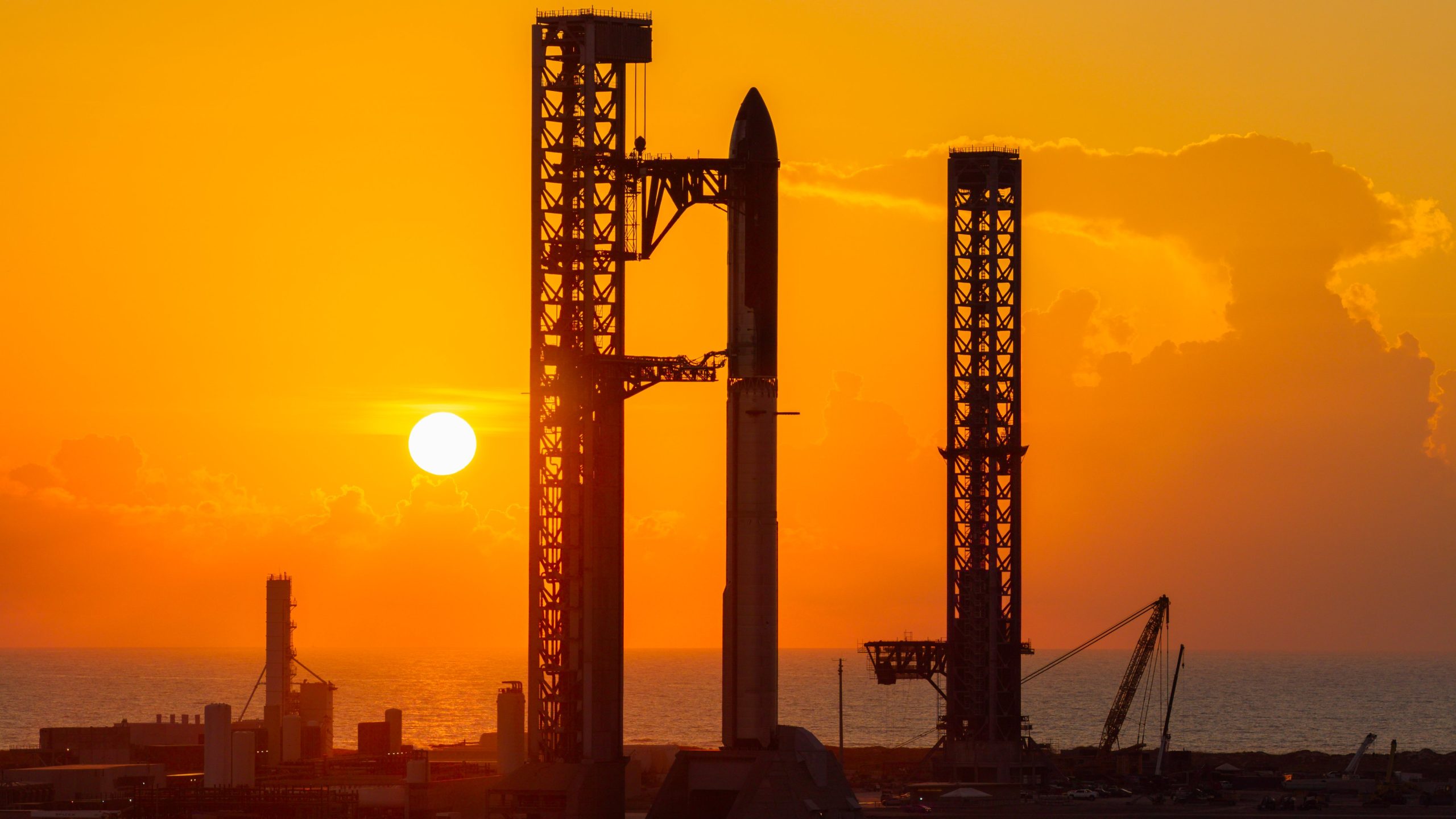
SpaceX has cleared one of the last hurdles before Starship’s first trip to orbit. The company posted on X Thursday afternoon that its launch rehearsal for Flight 14 was complete, keeping the mission on track for Monday, September 28. The launch window opens at 7:15 a.m. CT at Starbase, Texas, and runs for 75 minutes.
A wet dress rehearsal is essentially launch day without the launch. Crews fill Booster 21 and Ship 41 with thousands of tons of extremely cold propellant, run the countdown nearly to ignition, then drain everything back out. It lets engineers catch leaks or equipment problems before anything leaves the pad. SpaceX still needs a launch license from the FAA before the stack, which stands 407 feet tall, can fly.
Flight 14 matters because of where it is going. All 13 previous Starship flights followed a suborbital path, which works like throwing a ball extremely high and far: the vehicle reaches space, but it is always on a course that brings it back down within about an hour. This time, Ship 41 will perform a short engine firing called an orbital insertion burn roughly 25 minutes after liftoff, giving it enough speed to keep falling around Earth instead of back into it. SpaceX plans about six laps at an altitude near 275 kilometers (171 miles) over nearly 10 hours, as Teslarati detailed when the mission was first announced.
Launch rehearsal complete ahead of Starship Flight 14 pic.twitter.com/h5LBYyBqi4
— SpaceX (@SpaceX) September 24, 2026
Getting into orbit also means Starship has to prove it can get back out. The ship must relight a single Raptor engine in space to slow down for reentry. SpaceX says it will only attempt the orbital insertion burn after flight controllers confirm the hardware needed for that return burn has enough backup, and its flight plan includes health checks that could shorten the mission to two or five orbits.
Flight 14 is also the first to put working satellites into service. Flight 13 carried 20 Starlink V3 satellites in July, but they came back down with the ship because that mission never reached orbit. This time, 26 V3 satellites are meant to stay up and join the constellation within a few weeks. Together they add about 26 terabits per second of network capacity, which SpaceX says is roughly 10 times what a single Falcon 9 launch of older V2 Mini satellites adds. Three of them carry cameras that will photograph Starship’s heat shield in orbit to check for tile damage before reentry.
The hardware has changed too. Ship 41 flies with extra fasteners on tiles in the most vulnerable areas, fixes for gaps where superheated plasma slipped behind tiles, and curved tiles designed to reduce heating between them. Two tiles recovered from Ship 40 will fly again, the first reuse of any part of a Starship heat shield. Booster 21 carries better engine filtering and new relight software after ice clogged three center engines on the previous booster, leaving only eight of 13 engines to restart for its landing burn.
Ship 41 is targeting a splashdown in the Pacific Ocean west of Chile, a new recovery zone after several Indian Ocean landings, while Booster 21 aims for the Gulf. Neither will be caught by the tower on this flight. Elon Musk said in August that a ship catch was likely “in a few months.”
Elon Musk
Google just picked SpaceX for its first step into orbital AI
Google will launch its first Project Suncatcher AI satellite on SpaceX’s Transporter-18 rideshare next week.
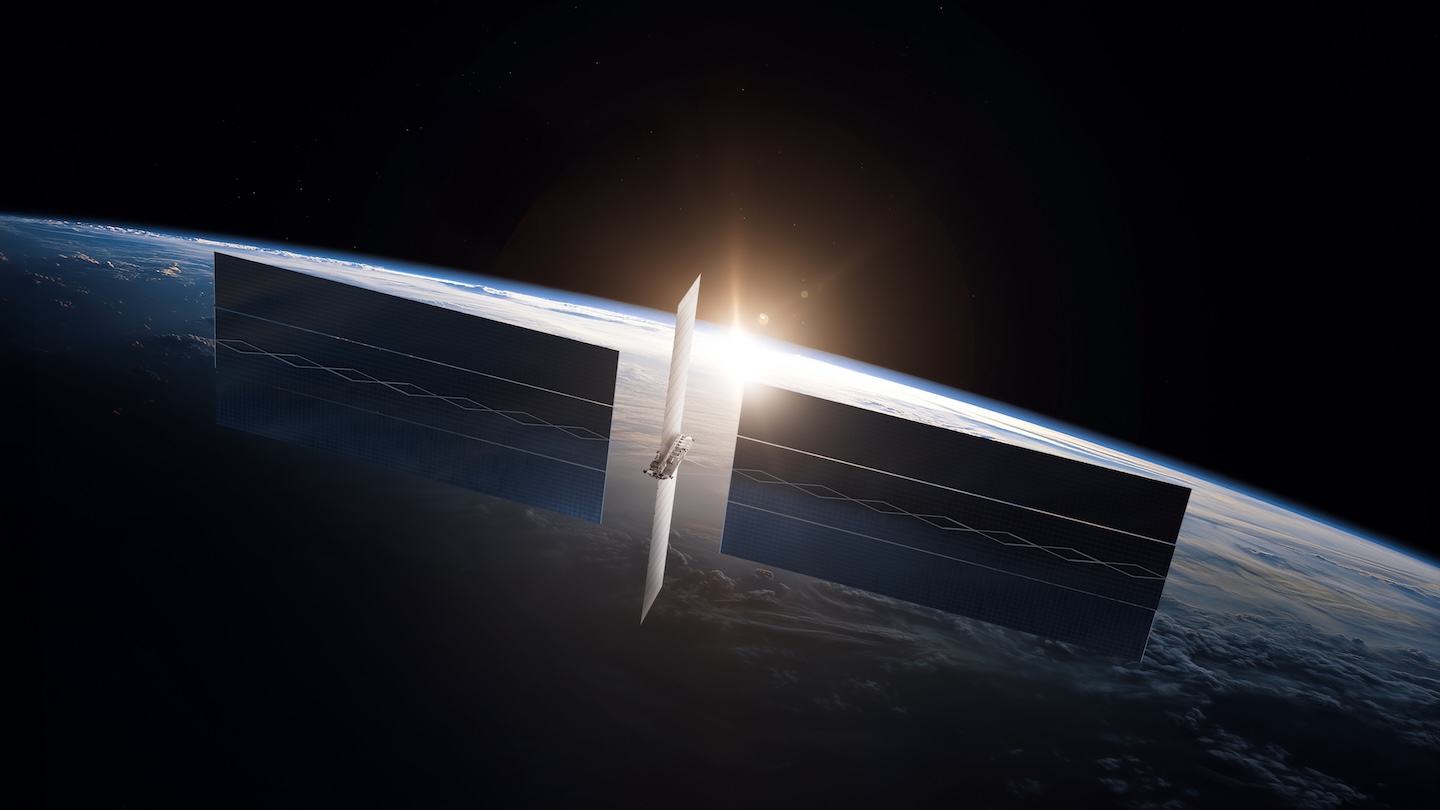
Google is about to put its own AI chips into orbit for the first time, and it is paying SpaceX to get them there.
The company said Thursday that the first in-orbit test of Project Suncatcher, its research effort to find out whether space can host large-scale AI computing, will fly next week on SpaceX’s Transporter-18 rideshare mission.
The satellite, called MVP, is about the size of a refrigerator and carries four of Google’s Tensor Processing Units, the same chips Google runs in its ground data centers. Google originally planned to launch two custom satellites in 2027, but chose to move faster by integrating its chips into a satellite.
MVP’s solar panels supply about one kilowatt of power, and Google will run Gemini models on the TPUs only in bursts of roughly 15 minutes before the chips shut down so the radiators can shed heat. In a blog post, Google said its Trillium TPUs survived vibration testing that mimicked sustained launch loads of up to 10g, with individual components seeing 50 to 100g, and handled a radiation dose greater than a five year mission would deliver.
SpaceX and Google mull massive partnership on Musk’s orbital data dream: report
Next week’s flight, slated for October 1, follows a relationship that became public in May, when Teslarati reported that Google was in talks with SpaceX for a launch deal tied to orbital data centers. Google also holds a stake of roughly 6% in SpaceX.
The two companies are chasing the same idea from very different starting points. SpaceX’s own orbital compute program is built around the AI1 satellite, a roughly 70 meter structure derived from Starlink V3 hardware that is designed for 150 kW of peak compute, about 150 times the power MVP will draw. Elon Musk has brushed off concerns about crowding orbit with those satellites, and SpaceX is building its Gigasat factory in Bastrop, Texas, to produce them, targeting an annualized rate of about 1 GW of space compute by the end of 2027.
Musk also posted on X on Thursday that “the amount of compute in space will obviously round up to 100% of all compute.”
Google has been more cautious in public. Its research estimates that launch prices need to fall below about $200 per kilogram before an orbital data center can compete with a ground facility on energy cost, a threshold the company believes could be reached around the mid 2030s. The Suncatcher team has said it expects the effort to remain a project rather than a product for years, which leaves the first real test of its hardware riding on a rocket from the company with the most aggressive timeline in the field.
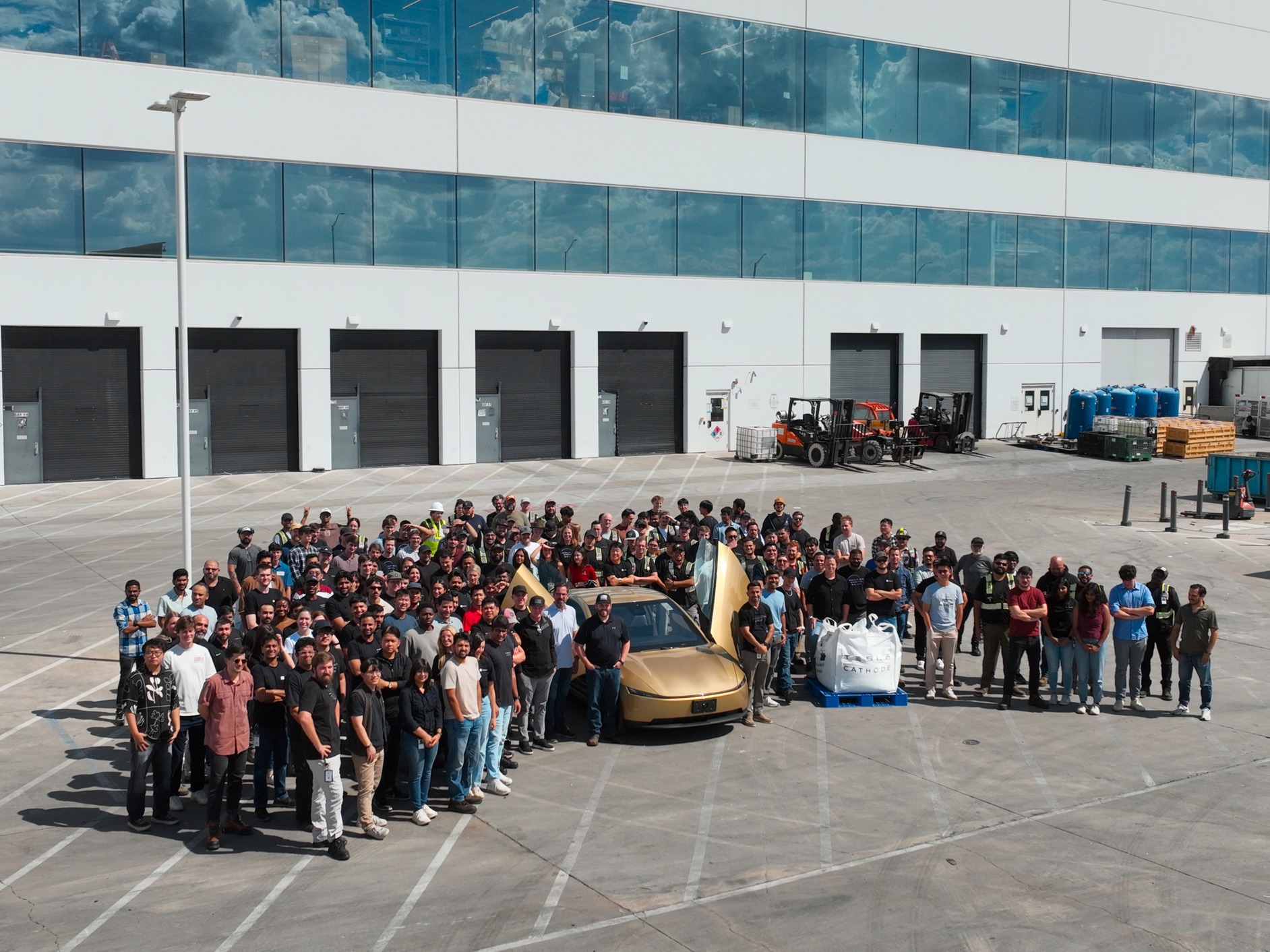
Tesla has taken another concrete step toward owning its battery supply chain, and it’s doing so with what is perhaps the most important vehicle in its short-but-storied history.
On September 23, Tesla announced that it has officially built the first Cybercab with cathode material produced in-house at the company’s first cathode plant in the U.S., and the first in the U.S. overall.
First Cybercab made using our in-house cathode material – from the first cathode plant in the Americas pic.twitter.com/X95aVXsT9H
— Robotaxi (@robotaxi) September 23, 2026
Active cathode material is the most expensive piece of a lithium-ion battery cell, and it often accounts for more than a third of cell cost. For years, the industry sourced a majority of it from Asia, but Tesla’s decision to make it in the United States bodes well for the Cybercab project. This is the latest chapter in Tesla’s vertical integration strategy, which began in public at Battery Day in 2020.
At the Battery Day Event, Elon Musk said the company would build a North American cathode plant and overhaul the process to cut costs and waste, while also making some of the most powerful and long-lasting cells in the industry.
The Austin facility took years to appear. Tesla filed permits for “Project Cathode” in 2022 on land near Giga Texas. By mid-2022, the building frame was up and Tesla later invested hundreds of millions of dollars as part of a larger expansion of the Giga Texas plant. The company stated it was operating the first large-scale cathode production facility in North America to supplement 4680 cell production.
One month later, that material reached a finished Cybercab.
Made with nickel cathode manufactured locally at Gigafactory Texas! https://t.co/DqMm5fZV3n
— Elon Musk (@elonmusk) September 24, 2026
The timing of this breakthrough is monumental for the Cybercab program. As Tesla officially launched the first Cybercab rides to the public earlier this month, production of the ride-hailing-geared vehicle is moving forward on the planned S-curve that CEO Elon Musk told everyone to expect.
Nevertheless, packs of Cybercab units have been spotted throughout the United States, in an effort to potentially activate the fleet as soon as the company gains regulatory approval in various geographic areas.
On top of that, Tesla owning the cathode step and pairing it with its own in-house lithium from the Gulf Coast refinery shortens the supply chain that once stretched thousands of miles and subjects every pack to fewer external price shocks and geopolitical risks.
Tesla is not yet independent of all of its foreign suppliers, as some precursor metals come from mines and chemical plants. But the first in-house cathode Cybercab shows the company is closing the most expensive and most concentrated gap in its battery production efforts. For a vehicle like Cybercab to operate at a high utilization within the Robotaxi network, that control over cost is so crucial.
It is arguably as important as the software that drives it.

SpaceX readies Starship Flight 14 for a historic journey into uncharted territory

Google just picked SpaceX for its first step into orbital AI


