News
DRIVERLESS TESLA CYBERCAB STRIKES AND KILLS DOG NAMED BUDDY NEAR ZILKER PARK; VEHICLE CONTINUES WITHOUT STOPPING


FOR IMMEDIATE RELEASE October 6, 2026
Contact: Austin Police Department Public Information Office media@austintexas.gov
DRIVERLESS TESLA CYBERCAB STRIKES AND KILLS DOG NAMED BUDDY NEAR ZILKER PARK; VEHICLE CONTINUES WITHOUT STOPPING
Witness photographs Texas license plate as gold robotaxi leaves the scene on Barton Springs Road
AUSTIN, Texas (Oct. 6, 2026) — A dog named Buddy was struck and killed Sunday evening by one of Tesla’s Cybercab robotaxis near Zilker Park, according to witnesses and the Austin Police Department. The vehicle did not stop after the collision and continued westbound on Barton Springs Road.
The incident occurred at approximately 6:40 p.m. just west of the Zilker Park off-leash area, a well-used field along Barton Springs Road where dogs run freely and residents walk the nearby trails and Barton Creek Greenbelt. Buddy, a 5-year-old mixed-breed dog owned by South Austin resident Daniel Ortega, ran toward the curb at the end of a walk when a passing Cybercab struck him.
Neighbor Priya Shah, who was leaving the park with her children, said the vehicle had no occupant. “There was no driver. It hit Buddy and just kept going,” Shah said. She photographed the Cybercab’s rear Texas license plate as the gold two-seater continued without slowing or pulling over, then turned the image over to police.
Austin Police confirmed they are investigating a hit-and-run involving an autonomous vehicle. Officers collected the photograph, interviewed witnesses, and requested Animal Control. Officials confirmed Buddy died at the scene. The department has not released the plate number while the investigation remains active.
Tesla began offering public rides in its purpose-built Cybercab in limited parts of Austin on September 4, 2026, after an invitation-only launch event the day before. The vehicles are glossy gold two-seaters with no steering wheel and no pedals. Riders book them through the same Robotaxi app used for Tesla’s Model Y robotaxis. Austin was still the only city with Cybercab ride-hail service as of early October.
Tesla’s Austin robotaxi pilot began in June 2025 with modified Model Y vehicles. Unsupervised rides, with no human safety monitor inside, expanded through 2026. By October 4, Tesla had extended Austin Robotaxi hours to 11 p.m., and Texas registrations for Cybercabs had risen from about 45 at the September 3 unveiling to 169. Waymo also operates fully driverless public rides in Austin. The National Highway Traffic Safety Administration said in September that it was evaluating Tesla’s Cybercab effort.
Tesla did not immediately respond to a request for comment. The company has previously said its Robotaxi team reviews incidents and that the vehicles operate under remote monitoring.
Ortega said Buddy was a regular at the Zilker off-leash field. “He got away from me for a second,” Ortega said. “I want to know why that car didn’t stop.”
Anyone with additional video or information is asked to contact the Austin Police Department.


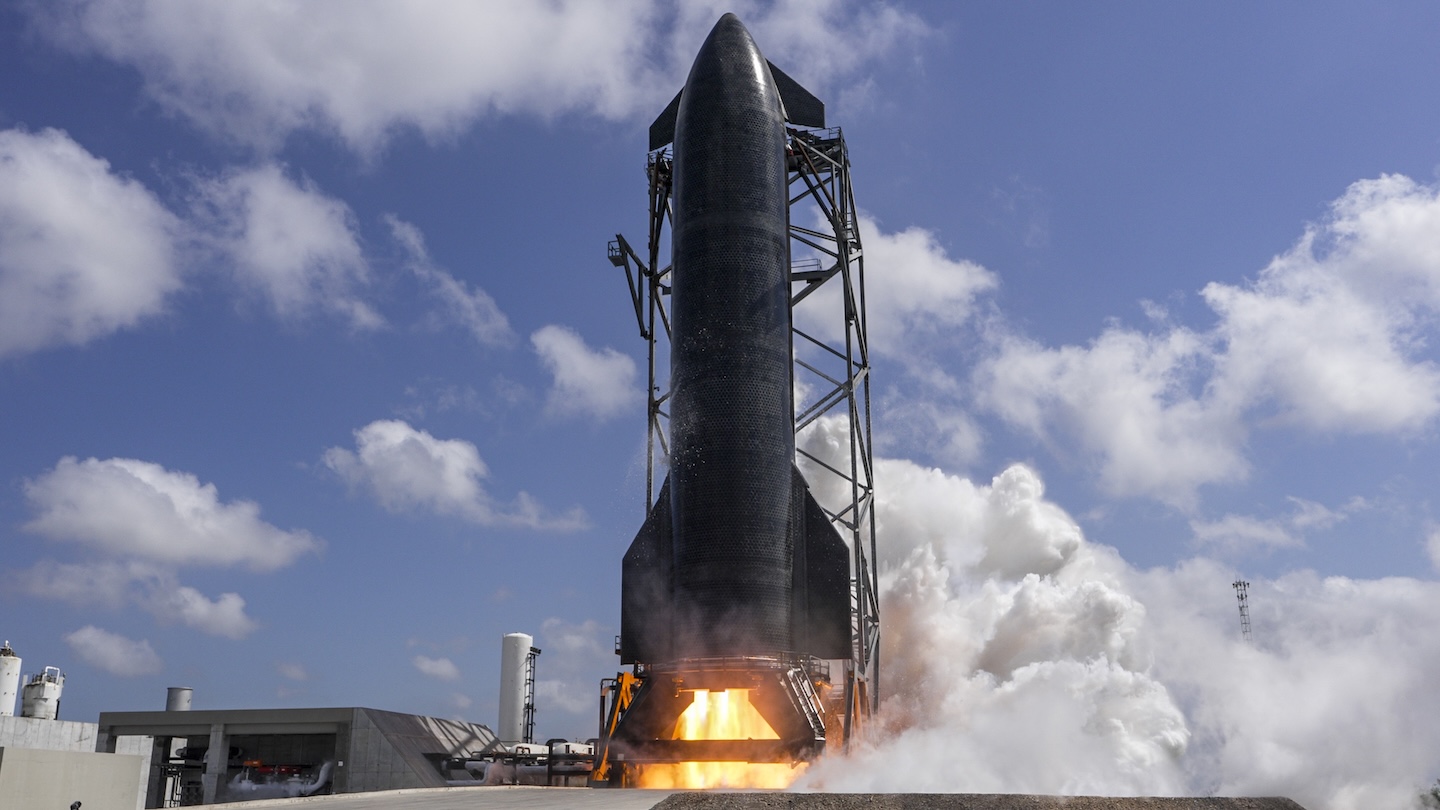
SpaceX CEO Elon Musk announced today that the company will likely attempt to catch the Starship upper stage with its launch tower arms “in a few months.”
In a post on X, Musk wrote, “Looks like we will probably catch the ship with the tower in a few months. If there had been a tower out to sea where we practiced landing the ship, it would have been caught.” He added that the first reflight of a Starship vehicle is expected by the end of 2026 or early 2027, describing it as “a fork in the road of history for consciousness reaching the stars.”
Looks like we will probably catch the ship with the tower in a few months. If there had been a tower out to sea where we practiced landing the ship, it would have been caught.
First reflight of the ship will be either end of this year or early next. That will be a fork in the… https://t.co/O5g9pqrzyo
— Elon Musk (@elonmusk) August 20, 2026
Musk’s prediction comes amid ongoing progress toward full reusability of the Starship system, a two-stage rocket designed for rapid turnaround and dramatically lower launch costs. Catching the upper stage, known simply as “ship,” with the Mechazilla tower’s mechanical arms would mark a major milestone. It would allow both stages to return directly to the launch site for quick refurbishment and reuse, eliminating the need for ocean recovery.
Musk has previously signaled plans for a ship catch. In July, shortly after SpaceX’s wildly successful Starship 13 mission, he stated that the company would attempt to catch the ship with the tower on the next flight unless problems emerged in the mission data review. Earlier comments also outline conditions such as successful soft ocean landings before attempting a land recovery to minimize risk.
SpaceX has solved Starship’s biggest challenge, Elon Musk says
The latest update from Musk adjusts this timeline to a few months, reflecting the iterative nature of the test campaign.
SpaceX has already demonstrated the tower catch technique successfully with the Super Heavy booster on a couple of occasions. The first successful booster catch occurred during Flight 5 in October 2024, when the massive first stage returned to the Starbase pad in Texas and was plucked from the air by the tower arms.
Additional catches followed on later flights, including Flight 7, proving the concept for the booster and building confidence in the system as a whole.
Achieving a similar catch for the upper stage would represent a significant step forward. The ship returns from much higher speeds and greater heat loads after orbital or near-orbital flight. Success would advance SpaceX’s goal of full and rapid reusability, potentially reducing the cost of access to orbit by a factor of 100 or more and supporting ambitions for frequent satellite deployments, lunar missions, and eventual Mars flights.
Musk has long emphasized that true reusability, refueling rather than discarding hardware, is essential for making humanity a multi-planetary species.
As SpaceX continues refining Starship through successive test flights, the coming months will test whether the ambitious catch timeline can be met. The combination of prior booster successes and improving ship landing precision suggests the company is steadily closing in on this historic capability.

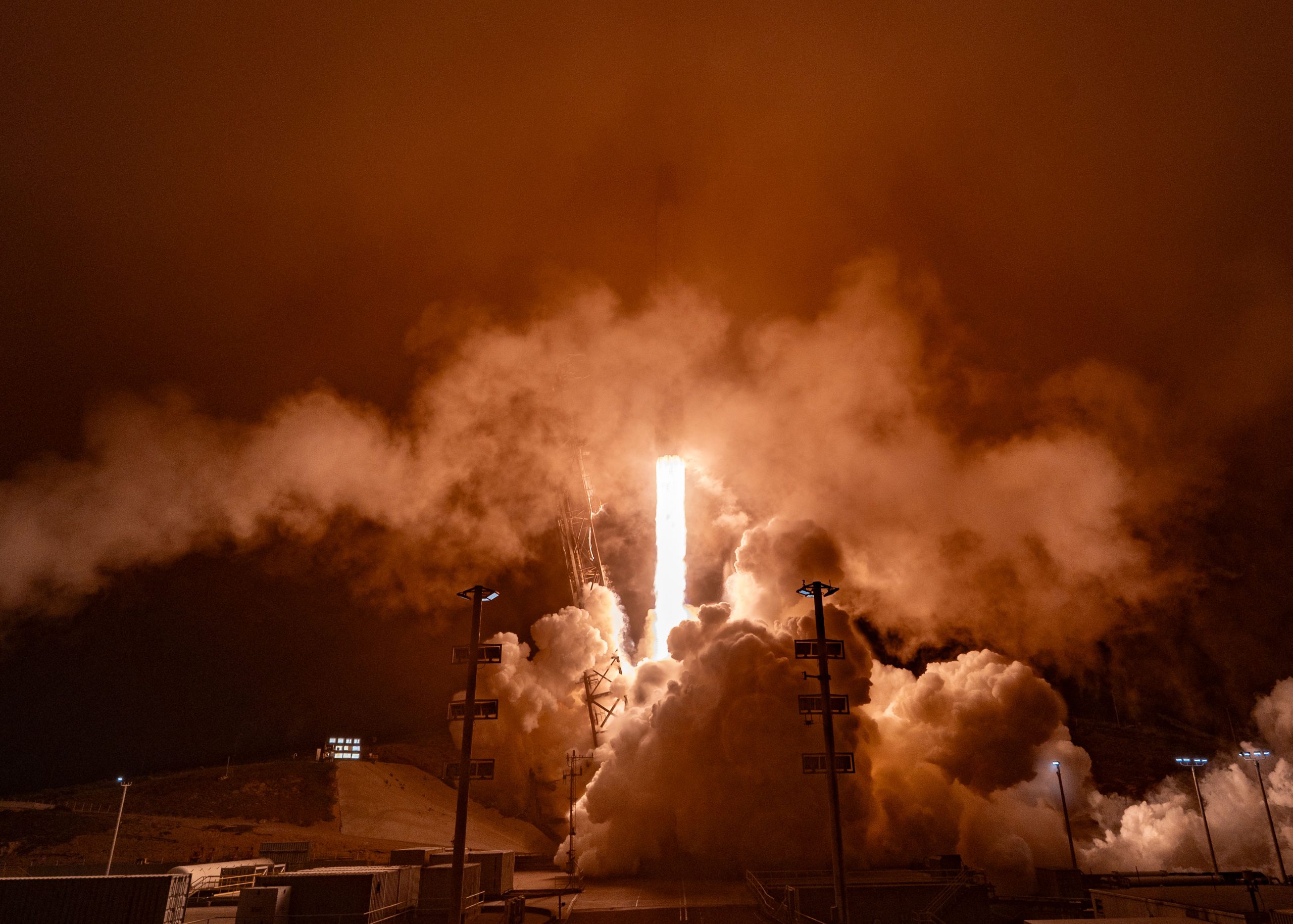
SpaceX has achieved an incredible milestone by launching its 11,000th Starlink satellite into orbit.
This accomplishment occurred during the Starlink Group 17-50 mission, which lifted off on August 19 at 04:01 UTC from Space Launch Complex 4 East at Vandenberg Space Force Base in California.
Falcon 9 launches 24 @Starlink satellites from California pic.twitter.com/UscpmAxDls
— SpaceX (@SpaceX) August 19, 2026
A Falcon 9 rocket carried 24 Starlink V2 Mini satellites on this flight, successfully deploying them into low Earth orbit approximately one hour after liftoff. The first stage booster, identified as B1097 on its twelfth flight, landed successfully on the droneship Of Course I Still Love You in the Pacific Ocean.
According to tracking data compiled around that date, this deployment brought the total number of Starlink satellites in orbit to just over 11,000.
The Starlink program began with test satellites known as Tintin A and B, launched on February 22, 2018. The first operational batch of 60 Starlink satellites followed on May 24, 2019, when a Falcon 9 rocket lifted off from Cape Canaveral. Those initial satellites marked the start of a rapid expansion that has continued for more than seven years.
SpaceX has conducted hundreds of dedicated Starlink missions since then, routinely launching batches of 20 to 30 satellites at a time using reusable Falcon 9 rockets. By mid-2026, the company had already surpassed 12,000 total satellites launched across all versions, with continuous replacements for units that deorbit as designed to manage space debris.
Looking ahead, SpaceX continues to expand the Starlink constellation to enhance global broadband coverage, capacity, and speed. The network already serves millions of users across more than 160 countries and supports applications ranging from residential internet to maritime, aviation, and emergency services.
Future plans center on next-generation hardware, including larger V3 satellites capable of delivering substantially higher throughput, which require the increased payload capacity of the Starship vehicle currently under development and testing.
In July, SpaceX submitted an application to the Federal Communications Commission seeking authority for a Gen3 constellation of up to 100,000 satellites. These spacecraft would operate in very low Earth orbit shells at altitudes near 325 kilometers and 475 kilometers. The filing requests use of existing Ku, Ka, V, and E band spectrum along with new greenfield W and D band frequencies between 92 and 275 GHz.
SpaceX states that the expanded system aims to deliver multi-gigabit symmetrical broadband to consumers, enterprises, governments, and billions of AI-powered devices worldwide while handling a majority of global internet traffic. Approval and subsequent deployment would depend on regulatory review and the operational readiness of Starship for high-volume launches.
This ambitious scale reflects SpaceX’s ongoing commitment to providing ubiquitous high-speed connectivity from space.

DRIVERLESS TESLA CYBERCAB STRIKES AND KILLS DOG NAMED BUDDY NEAR ZILKER PARK; VEHICLE CONTINUES WITHOUT STOPPING

Elon Musk gives a timeline for SpaceX’s first Starship catch attempt


